
SONOFF Zigbee Human Presence Sensor SNZB-06P
4.0Editor score
5.8GHz microwave presence detection
Built-in ambient light sensing
Zigbee 3.0 compatibility
Local scene execution
This Home Assistant Human Presence Sensor guide compares radar, Zigbee, Matter, Wi-Fi, light, climate, range, and setup features for smarter homes.
A Home Assistant Human Presence Sensor can distinguish an occupied room from one that is merely in motion, helping prevent lights from switching off while someone reads, works, or rests. The best model combines reliable radar detection, responsive automation, straightforward integration, and a form factor suited to the room being monitored.
This guide compares ten presence sensors based on detection technology, connection method, sensing range, adjustability, environmental sensors, power requirements, ecosystem support, and Home Assistant compatibility. It includes direct Wi-Fi devices, Zigbee options requiring a hub, and a Matter model for flexible local control, with attention to the compromises of each approach.
Each review explains the sensor's strongest feature, practical limitations, and ideal installation environment. The leading options range from a budget-friendly Zigbee detector to a feature-rich multi-sensor and a wireless Matter device. Product specifications and availability can change, so confirm current details and pricing before purchasing.
4.0Editor score

4.4Editor score

3.6Editor score
The table below compares all ten sensors by sensing method, connection, practical detection coverage, and major strengths, making it easier to match a device with your Home Assistant setup and room priorities.




The Akamatis Litos v3 combines 24GHz millimeter-wave radar with an integrated ambient light sensor and earns a 4.4 rating. It is the most balanced option in this guide because it addresses the two most common presence-automation problems: recognizing a person who is not moving and avoiding unnecessary lighting when a room is already bright.
We may earn a commission when you buy through this link, at no additional cost to you.
Its radar can identify both motion and stationary objects at distances of up to 20 feet indoors, while adjustable sensitivity helps users tune the detection boundary. The VEML7700 light sensor adds context that is especially useful in Home Assistant automations, such as switching on a dim lamp only when the room is occupied and dark. The light-permeable front panel allows the sensor to read ambient conditions without sacrificing its understated appearance.
Setup is streamlined because the device arrives with ready-to-use ESPHome firmware. That removes the need for manual flashing and makes it a more approachable option than many enthusiast-oriented radar projects. The trade-offs are meaningful, though: it is designed specifically for Home Assistant, and the ESP32-C3 platform connects over 2.4GHz Wi-Fi rather than Zigbee or Thread.
This is the leading recommendation for a homeowner who already operates Home Assistant and wants a single compact device for reliable room occupancy and context-aware lighting. It is less suitable for a mixed-ecosystem household that wants a sensor to pair directly with several unrelated platforms. Even so, its broad feature set, thoughtful front design, and simple provisioning make it a strong all-around choice.
Combining radar and light sensing reduces the need for a separate brightness sensor in many rooms. Home Assistant can use the two readings together to distinguish occupancy from darkness, producing more precise lighting behavior and reducing unnecessary activation.
The pre-flashed ESPHome firmware streamlines initial configuration through the device's setup process. With Wi-Fi credentials supplied and the unit added to Home Assistant, automations can be built around its presence and illuminance entities.
We may earn a commission when you buy through this link, at no additional cost to you.
The Akamatis Presence Sensor v2.2 is a focused 24GHz radar detector with a 4.4 rating. It uses the HLK-LD2410B module and a Seeed C3 controller with an external Wi-Fi antenna, giving it a useful combination of broad indoor coverage and a compact enclosure.
We may earn a commission when you buy through this link, at no additional cost to you.
The main advantage is its ability to detect moving and stationary people without requiring a light sensor or additional environmental hardware. Adjustable sensitivity makes it practical for different room sizes, while the external antenna is intended to improve wireless range and stability. Its ready-to-use ESPHome firmware also means users can connect through the device hotspot and provide Wi-Fi credentials instead of manually compiling and flashing software.
Compared with the Litos v3, this model is the better fit for someone who wants presence detection on a straightforward budget. The lack of an ambient light sensor means the user may need another illuminance sensor for darkness-aware lighting routines, and the package is explicitly sensor-only. It also remains exclusive to Home Assistant rather than serving as a broad cross-ecosystem sensor.
For an established Home Assistant household seeking reliable radar presence detection without paying for a multi-function device, this is a sensible and economical choice. It may suit a bedroom, office, hallway, or living room where occupancy alone is the primary automation trigger.
Radar-based presence sensing is especially valuable in spaces where a traditional motion sensor would time out during reading, computer work, or relaxation. The v2.2 can continue to register occupancy while the person remains still.
The external Wi-Fi antenna can be advantageous when the sensor is installed farther from the router or near obstructions. Placement still matters, so users should confirm signal quality and adjust radar sensitivity only after observing real room behavior.
We may earn a commission when you buy through this link, at no additional cost to you.
This generic Zigbee Human Presence Sensor offers a 4.0 rating and broad compatibility with Home Assistant, SmartThings, Hubitat, Tuya, and compatible Echo devices. Its 24GHz millimeter-wave radar detects both movement and stationary people, addressing the central weakness of PIR-only occupancy sensors.
We may earn a commission when you buy through this link, at no additional cost to you.
The ability to recognize someone sitting still, reading, or sleeping makes the device useful for living rooms, bedrooms, and bathrooms. A stated detection distance of up to 20 feet provides roomy coverage, while two AAA batteries are advertised to last approximately two years in typical use. Zigbee integration can also extend the sensor into a larger network rather than tying it to one Wi-Fi access point.
The important limitation is that a Zigbee hub is required. Compatibility also depends on the relevant hub and integration, so the listing's ecosystem support should be verified against the user's exact platform. Battery operation improves placement flexibility but introduces periodic replacement and a possible decrease in radio range compared with mains-powered sensors.
This is a good option for users who already operate a capable Zigbee network and want broad ecosystem choice. It offers more placement freedom than a USB-powered unit and simpler network behavior than a direct Wi-Fi sensor, provided the associated hub is already available.
Zigbee is a mature smart-home standard supported by several major platforms. For a household that already uses Zigbee, the sensor can fit into an established coordinator and automation architecture without creating another standalone Wi-Fi device on the network.
Battery operation makes this sensor practical for finished rooms without nearby outlets. The mounting location can be refined to cover a sofa, bed, desk, or other area where a person tends to remain still, provided the battery specification remains adequate for the selected duty cycle.
We may earn a commission when you buy through this link, at no additional cost to you.
The Aqara Presence Sensor FP300 is the most feature-dense model in the guide, combining AI processing, PIR, 60GHz millimeter-wave radar, light, temperature, and humidity sensing. Its 3.6 rating is the lowest among the reviewed products, but that figure should be considered alongside its unusually broad specification set and flexible radio options.
We may earn a commission when you buy through this link, at no additional cost to you.
Its AI-assisted detection is designed to learn room conditions and reduce false triggers while preserving occupancy awareness. The multi-sensor package can support lighting, climate, and security automations without several separate devices. A 120-degree field of view, up to 20-foot range, and adjustable mount offer practical flexibility for wall, ceiling, or corner positioning.
Connectivity choices are another major strength. The FP300 supports Matter over Thread and Zigbee, with stated compatibility including Home Assistant, Apple Home, Alexa, Google Home, SmartThings, and Homey. Users must have the required Thread Border Router and Matter Controller for third-party Matter ecosystems, while Aqara users need a compatible hub and current firmware. Two replaceable CR2450 batteries provide stated battery life of up to three years in Zigbee mode or two years in Thread mode.
This premium sensor is most suitable for a homeowner who values consolidation, polished installation options, and multiple protocol choices. The lower rating and hub requirements deserve attention, but the FP300 can reduce sensor clutter in a carefully planned smart home.
Presence, light, temperature, and humidity data can inform a broader set of automations than a simple occupancy switch. A climate system, for example, can use room conditions alongside presence rather than operating only on a schedule.
Supporting both Matter over Thread and Zigbee adds deployment flexibility, but it also means the supporting infrastructure must match the selected mode. Check hub compatibility, current firmware, and local-control requirements before installation.
We may earn a commission when you buy through this link, at no additional cost to you.
The SONOFF SNZB-06P24 is a 3.8-rated Zigbee presence sensor distinguished by zone positioning and self-learning calibration. Its 24GHz radar can register subtle human micro-movements such as breathing, while the integrated light sensor supports more precise lighting decisions in Home Assistant.
We may earn a commission when you buy through this link, at no additional cost to you.
Up to seven configurable zones can be enabled or disabled within a four-meter range and 110-degree field of view. This is useful in rooms where a corridor, window, or appliance may trigger unwanted events. The calibration function learns the environment and attempts to filter repetitive interference, which may make the sensor more suitable for complicated layouts.
Its main compromises are the need for a Zigbee hub and continuous USB-C power. The stated range is also shorter than the 20-foot figure associated with several competitors, making careful placement more important. Although third-party users can access advanced settings through BLE in the eWeLink app, Home Assistant remains one of the supported Zigbee environments.
This model is worth considering for a bedroom, lounge, or workspace where you want to focus detection around a sofa, desk, or sleeping position. Its zone controls and environmental learning are more valuable than maximum range for many practical room layouts.
Disabling unwanted zones can prevent a hallway or window from being treated as occupied. This creates a more targeted automation field than a broad room-wide presence pattern, especially in open-plan homes.
Self-learning calibration is designed to recognize repetitive disturbances from appliances, pipes, or airflow. The practical result should be verified in the actual room because mounting angle, nearby surfaces, and changing conditions can affect radar behavior.
We may earn a commission when you buy through this link, at no additional cost to you.
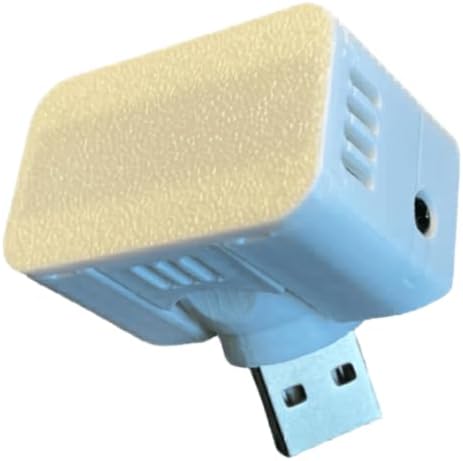
The SONOFF SNZB-06P combines 5.8GHz microwave radar with light sensing and earns a 4.0 rating. It is designed for a clear job: keeping lights on while a person is present and only activating them when the room is dark.
We may earn a commission when you buy through this link, at no additional cost to you.
The radar detects both movement and a stationary person, which allows an automation to distinguish actual occupancy from simple motion. Its built-in light detector limits unnecessary activation in illuminated spaces. The unit also participates in Zigbee 3.0 ecosystems and supports local scene linkage between devices, including operation without an internet connection.
Compatibility is broad in principle, with support listed for Home Assistant, SmartThings, Alexa, Google Home, Alice, and IFTTT, while specific bridge support includes several SONOFF coordinators and an Echo Plus variant. The sensor does require a Zigbee hub or bridge, and its listed information does not provide a maximum detection distance. USB power also means the mounting location needs access to a cable or suitable power arrangement.
For a user seeking an uncomplicated occupancy-and-light sensor within a Zigbee network, this is a capable option. It lacks some of the advanced zoning and environmental learning found in the SNZB-06P24, but it delivers the essential functions with a good 4.0 rating and broad platform support.
The combination of presence and light data is ideal for a basic room automation. Home Assistant can keep a fixture active while someone remains still and avoid turning it on when daylight already provides sufficient illumination.
Stated local scene linkage means participating Zigbee devices can execute linked behavior without an internet connection. This is valuable for routines that should continue functioning during an outage, provided the associated hub and devices support the required local operation.
We may earn a commission when you buy through this link, at no additional cost to you.
This compact Zigbee Presence Sensor combines 24GHz radar with temperature, humidity, and light measurements. It has a 3.9 rating and is especially notable for fitting into a 40 by 40 by 20 millimeter enclosure without sacrificing the environmental sensors that many basic presence devices omit.
We may earn a commission when you buy through this link, at no additional cost to you.
The radar can detect slight breathing and small micro-movements, helping maintain occupancy status during quiet activities. Temperature, humidity, and illumination readings make the device useful for more context-aware Home Assistant automations. Its compact body, integrated magnetic base, and included 3M tape make it easy to position on a refrigerator, metal surface, glass, tile, or wall.
A CR2450 battery is included, which removes the need for a nearby outlet, although the product information describes longevity only generally as continuing for months rather than offering a precise figure. The sensor also requires a Zigbee network. Because no maximum detection distance is supplied, buyers should treat it as a close-to-medium-range room sensor and validate coverage after installation.
This is a good choice for Home Assistant users who want a small, unobtrusive presence device that can also contribute climate and light data. It is less suitable when a long, explicitly stated detection range or broad mounting flexibility is the primary requirement.
Temperature, humidity, and light readings can be used to refine climate and lighting rules without installing separate sensors. The compact enclosure also makes it practical for smaller rooms, shelves, and unusual mounting surfaces.
The magnetic base and included tape make repositioning easier than with permanently fixed hardware. Because the device is battery-operated, checking the cell periodically is important, particularly if the sensor is used in a high-traffic area.
We may earn a commission when you buy through this link, at no additional cost to you.
The Akamatis Presence Sensor v1.3 carries a 4.9 rating, the highest customer score among the ten products. It provides direct Home Assistant integration through 2.4GHz Wi-Fi, combines 24GHz radar with adjustable sensitivity, and covers indoor presence detection up to 20 feet.
We may earn a commission when you buy through this link, at no additional cost to you.
Its HLK-LD2410B radar module distinguishes moving people from stationary occupants, which reduces false off events during reading, desk work, or relaxation. An ESP32-C3-WROOM controller and external Wi-Fi antenna support the connection, while pre-flashed ESPHome firmware removes the need to compile or manually flash firmware.
The principal trade-off is the USB-A male connector and two-axis joint. Although this avoids batteries and simplifies continuous power, it may not fit neatly at every mounting position. Like the other Akamatis options, the device is designed specifically for Home Assistant, and it does not include the ambient light sensor found in the Litos v3.
Despite those limitations, the v1.3 is an attractive option for a homeowner who values a highly rated, direct Wi-Fi presence sensor and already has Home Assistant running on a computer. Its stated sensing capabilities, external antenna, and simple firmware setup make it particularly compelling in bedrooms, offices, and living areas.
A 4.9 rating suggests strong customer satisfaction, though ratings should not be treated as a substitute for checking current integration documentation. Users should still confirm the current firmware and Home Assistant configuration process before purchase.
The v1.3 focuses on a single core function: knowing whether the monitored area is occupied. That makes it suitable for automations where reliable presence is more important than a broad collection of environmental measurements.
We may earn a commission when you buy through this link, at no additional cost to you.
The WenzhiIoT Presence Sensor is a 3.8-rated 5.8GHz radar detector designed for detailed tuning in Home Assistant and Tuya-based setups. It distinguishes human presence, static occupancy, micro-motion, and ordinary movement, giving automators several behavioral states to work with.
We may earn a commission when you buy through this link, at no additional cost to you.
Its controls are unusually granular. Sensitivity can be set from 1 to 9, minimum detection range can start at 0.00 meters, maximum range can reach 9.5 meters, and separate delays cover detection and unmanned periods. The listed maximum range is much larger than most competitors, although the usable result depends on room geometry, mounting, and interference.
The product also supports configurable data-reporting intervals through Zigbee2MQTT, which can reduce network chatter while preserving real-time changes in presence state. Illuminance and distance readings further enrich its data. The catch is setup complexity: a Tuya Zigbee gateway is required, and if Zigbee2MQTT does not identify the device directly, the user must obtain a compatible JavaScript file from the referenced GitHub source.
This model appeals to technically confident users who want extensive control over detection boundaries and reporting. It is less appealing for a simple plug-and-play installation, but those willing to configure the bridge and custom device definition gain unusually precise control.
Separate minimum and maximum distance controls can help isolate a desk, bed, or sofa from adjacent traffic. These controls should be adjusted gradually, because a very narrow field may miss someone approaching the area from an unexpected angle.
A configurable reporting interval can make the device less noisy in a busy Zigbee network. The listing states that real-time synchronization still occurs when the presence state changes, allowing users to balance network traffic with prompt automation response.
We may earn a commission when you buy through this link, at no additional cost to you.
The Meross Presence Sensor MS600 combines radar, PIR, and light sensing in a Matter-over-Wi-Fi device with a 3.8 rating. It is designed to provide both motion detection and awareness of a stationary occupant, offering a broader protocol choice than devices tied to one ecosystem.
We may earn a commission when you buy through this link, at no additional cost to you.
Matter integration supports Meross, HomeKit, Alexa, Home Assistant, and Google Home, with an emphasis on local control, lower latency, and privacy. The adjustable base pivots 180 degrees and rotates 360 degrees, while integrated cable management helps keep the 1.5-meter cord orderly. Detection extends up to 12 meters for motion and six meters for effective presence sensing.
The unit needs continuous power, which is acceptable for a permanently installed wall sensor but less flexible than a battery model. The product information also says no hub is needed for HomeKit, Alexa, Google Home, Home Assistant, or the Meross app, while Matter compatibility itself requires a hub. That distinction should be checked against the user's current controller before installation.
The included pet-proof shield helps prevent pets or a robot vacuum from causing unwanted triggers. This makes the MS600 attractive for homes where traditional motion sensors frequently activate on moving animals. It is a strong choice for Matter users who value flexible placement and cross-platform compatibility, though its shorter presence range should be considered for large rooms.
Matter provides a common control framework for compatible platforms, reducing the need to maintain a separate proprietary integration for each ecosystem. The required hub still matters, so users should confirm controller and hub support before installation.
The supplied shield can limit detection of smaller moving objects at or near floor level. It is particularly useful in rooms where pets or robot vacuums are likely to cross the sensor's installation zone.
We may earn a commission when you buy through this link, at no additional cost to you.
The right presence sensor depends on your hub, wiring, room size, and automation goals. Compare protocol support, true stationary detection, adjustability, environmental sensing, and installation constraints before choosing a model.
Choose the protocol already used by your automation platform whenever practical. It reduces cost, configuration work, and the likelihood of compatibility surprises.
For reading, desk work, and bedroom lighting, prioritize a radar sensor explicitly designed for stationary presence.
Optimize placement for the occupied zone, not merely the largest possible radius. Zone controls can be more valuable than extra maximum range.
Choose extra environmental sensors when they serve a clear automation. Avoid paying for measurements that will not improve your routines.
Account for the entire installation, including power access, cable direction, mounting height, and future battery service.
Prioritize controls that address the actual source of false triggers in your room. Test long enough to observe fans, daylight changes, and routine movement.
Verify exposed entities and local-control behavior, not just the statement that the product supports Home Assistant.
Use local control where available and avoid placing sensitive sensors in areas where their occupancy data would be unnecessarily invasive.
Begin by identifying the automation goal and the zone that defines occupancy. For reading lights, target the chair and nearby approach path; for a bedroom, cover the bed and entry area; for hallway lighting, use a narrower field to avoid neighboring rooms. Mount the sensor at the recommended height, keep it away from direct sunlight and moving fabric, and use the supplied bracket, magnet, adhesive, or wall mount as intended.
After installation, pair the sensor with Home Assistant using the required Wi-Fi setup, Zigbee coordinator, or Matter controller. Create a simple presence automation first and confirm that the entity changes correctly when a person enters, remains seated, and leaves. Only then add illuminance thresholds, delays, scene actions, or conditional triggers. Use conservative delays and avoid routines that react to rapid, contradictory state changes before testing is complete.
For ongoing care, clean the sensing surface gently and keep the view free of dust, condensation, stickers, and obstructions. Check wireless connections and logs, update firmware when appropriate, and replace batteries on a schedule for battery-powered units. Recheck sensitivity and zones after moving furniture or changing room use, since reflective surfaces and new obstacles can alter radar behavior.
It depends on the connection method. Direct 2.4GHz Wi-Fi models such as the Akamatis sensors can connect to Home Assistant without a dedicated presence-sensor hub. Zigbee products require a compatible Zigbee coordinator, while the Meross MS600 has a Matter-over-Wi-Fi path whose hub requirements differ by platform and function. Always verify the exact coordinator and current Home Assistant integration before purchasing.
A motion sensor reports movement and may stop responding when a person remains still. A true presence sensor attempts to maintain an occupied state during quiet activity such as reading, working, or sleeping. Radar-based presence sensors are generally better suited to preventing lights from turning off while someone is motionless. The exact entities and detection states exposed in Home Assistant should be checked after pairing.
The best connection is usually the one already supported by your existing infrastructure. Zigbee is convenient for established low-power networks, ESPHome over Wi-Fi is straightforward for a small number of direct devices, and Matter can provide a standardized route across compatible platforms. Consider hub availability, local-control requirements, device count, network maintenance, and the responsiveness you need before deciding.
Not always. Presence sensors are excellent for occupied-room and lighting logic, but traditional PIR sensors may still be useful for movement-based alarms, stairway activation, or areas where a broad detection field is preferred. Some premium units combine PIR and radar specifically to support both kinds of behavior. Designing each automation around the intended trigger produces better results than replacing devices indiscriminately.
Radar sensors can respond to moving curtains, fans, pets, robot vacuums, pipes, or other changing surfaces. Mounting angle, nearby reflective objects, sensitivity, and improperly defined detection zones can contribute. Start with a lower sensitivity, restrict the zone, enable available calibration, and observe the room during different times of day. Persistent interference may indicate a poor mounting location.
It depends on the routine. A sensor with only presence can control lights directly, but it cannot determine whether the room is already bright. Integrated light sensing allows Home Assistant to activate a dim fixture only when the room is occupied and dark. The Litos v3, SNZB-06P, WenzhiIoT, FP300, and MS600 include light sensing, providing useful context without a separate illuminance sensor.
Position it where it can observe the area where a person actually remains, while keeping it away from direct sun, moving fabric, and dense obstructions. Follow the manufacturer's mounting guidance, use the supplied adjustable mount, and avoid pointing it through large amounts of metal or reflective material. Test presence, absence, and stationary occupancy before finalizing delays and automation thresholds.
They do not create a camera image, but their occupancy and motion readings can still reveal when a space is used. Consider whether presence in a bedroom or bathroom needs to be recorded, minimize unnecessary logging, and use local automations where possible. Mount the sensor away from areas where its inferred activity data would be more revealing than needed.
The Akamatis Litos v3 is the strongest all-around selection because it combines 24GHz presence radar, integrated light sensing, a 20-foot stated range, and pre-flashed ESPHome firmware in one Home Assistant-focused package. The Akamatis v2.2 is a more economical radar-only alternative, while the Aqara FP300 stands out for its five-in-one sensing, AI-assisted detection, flexible mounting, and Matter or Zigbee choices.
For most buyers, the priorities should be reliable stationary-presence detection, a protocol already supported by the home, a field of view suited to the target zone, and dependable local control. Additional light, temperature, humidity, distance, and zone features are useful only when they support a concrete routine. The SONOFF, WenzhiIoT, generic Zigbee, and Meross options provide attractive alternatives for particular network and installation needs.
Before buying, verify the current Home Assistant integration, required hub, exposed entities, power arrangement, and mounting location. Specifications, firmware, compatibility, and prices can change, so check the live listing and recent product information before placing an order.