
4 Inch x 180 Foot Waterproof Seam Tape
4.1Editor score
Moisture-resistant coating
UV-resistant construction
Multiple surface applications
Tape for plastic sheeting must bond reliably, resist weather, and remain flexible enough to follow seams, rips, corners, and irregular surfaces. The right choice depends on whether you are joining polyethylene film, repairing a greenhouse, or sealing a moisture barrier, as each application places different demands on adhesion and coverage.
We compared all ten products by material, dimensions, intended use, adhesion, weather resistance, UV performance, and installation convenience. The list includes 9-mil vapor barrier tapes, clear polyethylene repair tapes, construction sheathing tape, clear Gorilla Tape, and pre-taped masking film, giving homeowners and professionals a broad set of options.
Each review explains the product's strongest use case, practical limitations, and ideal buyer. The highest-rated products lead the guide, while specialty tapes offer better answers for greenhouse damage or painting protection. Product prices and availability can change, so confirm current listing details before buying.
4.1Editor score

4.9Editor score

4.2Editor score
As an Amazon Associate we earn from qualifying purchases.
The comparison below places every tape by its most relevant attributes, including roll size, material, adhesive type, and primary application, making it easier to match a product to a specific plastic-sheeting task.


The TapeManBlue 4 inch x 180 foot white polyethylene tape is a strong all-purpose answer for sealing plastic sheeting, and its 4.6 rating reflects broad buyer satisfaction. Its 9-mil polyethylene backing provides meaningful durability without sacrificing the flexibility needed to follow overlapping films, liners, and vapor barriers. The result is a tape that feels purpose-built for demanding seam work rather than a general-purpose adhesive disguised as a construction product.
We may earn a commission when you buy through this link, at no additional cost to you.
The tape's strong adhesive is designed to seal joints and seams in plastic poly liners and vapor barriers, which is exactly where consistency matters. Its UV-resistant coating allows continued outdoor exposure, while its waterproof construction helps protect the enclosed area from moisture. Buyers can also use it for crawl space encapsulation, basement moisture control, concrete-adjacent seams, underlayment, marine preservation, outdoor masking, restoration, and general patch-and-repair work.
There are a few trade-offs. The white appearance is noticeable on clear greenhouse film and may be less desirable where visual discretion is important. The 4-inch width is also narrower than a dedicated 6-inch greenhouse patch tape, although it remains wide enough for typical seam reinforcement. Because the backing is described as polyethylene and the adhesive is permanent in practical construction use, care is still appropriate around surfaces that might later need cleaning.
This is the most versatile recommendation for someone who needs more than isolated greenhouse repair. It is particularly attractive for crawl space encapsulation, basement liners, polyethylene vapor barriers, and construction seams. Choose it as the best overall tape for plastic sheeting when you value one product that can handle moisture barriers, repairs, and exposed outdoor applications without changing tools.
This tape's strongest attribute is its ability to create consistent seals across overlapping polyethylene materials. That makes it well suited to crawl spaces, basements, concrete-adjacent areas, and other locations where a weak seam could allow unwanted moisture movement.
The same 9-mil construction supports marine preservation, outdoor masking, restoration, and general repair work. That flexibility makes the roll useful for property owners who would rather maintain one dependable seam tape than stock several narrowly specialized products.
We may earn a commission when you buy through this link, at no additional cost to you.
This 4 inch x 180 foot waterproof seam tape combines a 9-mil polyethylene construction with an aggressive acrylic adhesive, giving it a 4.3 rating among buyers seeking quick, dependable adhesion. It is designed to form an immediate seal at seams, corners, and irregular shapes, reducing the need to wait for curing before continuing a project.
We may earn a commission when you buy through this link, at no additional cost to you.
Adhesion is one of its primary selling points. The acrylic adhesive bonds to polyethylene films, wood, metal, aluminum foil insulation, and other clean surfaces. That broad compatibility allows the roll to handle vapor barrier seams, basement insulation, ductwork, greenhouse plastic, roofing work, and industrial applications without requiring a different tape for each material.
The UV-resistant coating and heavy-duty polyethylene backing are intended to withstand prolonged sunlight, temperature changes, and harsh weather without cracking or discoloring. One practical concern is that such aggressive adhesion is less forgiving than a removable household tape; surfaces should therefore be clean and dry, and users should avoid unnecessary repositioning after contact.
Buyers who value speed and immediate handling strength will find this tape easy to work with. It is a strong choice for repairing greenhouse film, sealing insulation, or completing crawl space seams on a professional schedule. It may not be the best option for a highly visible repair where a clear patch is required, but its construction-focused formula makes it an effective general-purpose plastic seam sealer.
The acrylic adhesive is engineered for fast bonding, so installation can continue without a curing pause. Positioning the strip accurately before pressing matters because such quick adhesion leaves less opportunity to adjust it repeatedly.
Compatibility with polyethylene, foil insulation, wood, and metal expands the tape's usefulness beyond plastic film. This makes it a practical option for mixed-material jobs where seams and repairs are not limited to a single surface.
We may earn a commission when you buy through this link, at no additional cost to you.
Tuck Tape Construction Sheathing Tape is a high-adhesive option that brings more strength than many patch products, earning a 4.7 rating. Its red 2.4-inch by 180-foot format is narrower and less visually discreet than clear film, but it is engineered for dependable bonds to plastic, metal, and other smooth surfaces where a strong temporary or permanent repair is needed.
We may earn a commission when you buy through this link, at no additional cost to you.
The adhesive maintains aggressive bonding across hot, cold, and humid conditions, while UV resistance supports use on surfaces exposed to sunlight. The product description specifically highlights door and window insulation, house wrapping, foam insulation, garage tents, shelters, tarps, foam board, and temporary camping equipment, which shows how widely the construction format can be applied.
Its most important warning is residue. The manufacturer says the tape can leave residue and may be difficult to remove, so it should not be placed on surfaces that must remain clean or easy to restore. The distinctive red color also makes it better for utility work than for repairs where the tape needs to disappear into a transparent greenhouse covering.
This tape is worth considering when a plastic repair must withstand handling and changing weather more than appearance. It is particularly useful for temporary outdoor shelters, construction membranes, and mixed-material patches. Buyers should test a small section first and use an inconspicuous area when removal could matter. For those concerns, it is a powerful construction tape rather than a discreet greenhouse film repair.
The adhesive is formulated for aggressive bonding in both hot and cold temperatures. That makes the tape useful for temporary shelters, garage covers, and other outdoor applications where a light household adhesive would be likely to let go prematurely.
Unlike ordinary tapes that bond tightly to cured epoxy, this product is described as an effective release material for two-part epoxy projects. That specialty application adds value for woodworking and mold-making users beyond standard sheeting repair.
We may earn a commission when you buy through this link, at no additional cost to you.
The TapeManBlue 6 inch by 108 foot greenhouse repair tape is the premium selection here because its wide, clear polyethylene format directly targets large tears, holes, and seam splices in plastic coverings. Its 4.2 rating indicates generally positive feedback, and the design emphasizes both durability and a visually unobtrusive repair.
We may earn a commission when you buy through this link, at no additional cost to you.
A 6-inch roll gives the installer more material around the damaged area than narrower tapes provide. That extra width can bridge a larger tear, support a stressed seam, or cover the fastener line around a greenhouse panel. The clear polyethylene construction allows the repair to blend with transparent poly sheeting, while the film's UV resistance and weather tolerance support continued exposure to sun and changing temperatures.
The main limitation is total length. At 108 feet, it is shorter than the 180-foot vapor barrier rolls and the 263-foot greenhouse tape in this guide. That makes it less convenient for extensive greenhouse covering replacements or numerous seams across a large property, but it remains practical for targeted repairs and splicing. The stated extreme-temperature resistance also should be understood as a product feature rather than a guarantee under every installation condition.
This is the preferred option for a large, obvious tear in clear greenhouse film, especially when the repair should remain visually discreet. It also suits plastic-sheeting splicing where width matters more than maximum roll length. For a property needing one broad patch after storm damage, this product delivers a specialized combination of coverage, clarity, and weather-oriented construction.
The six-inch width gives a repair more supporting material than a standard narrow patch strip. It can cover a larger damaged area and place more adhesive around the edges of a rip or splice.
Because the patch is transparent, it is less likely to distract from the greenhouse covering than white or red tape. This makes the product a better fit for visible repairs where light transmission and appearance are priorities.
We may earn a commission when you buy through this link, at no additional cost to you.
GORILLA Crystal Clear Tape combines a 4.7 rating with a reinforced backing and a waterproof clear film, making it a convincing choice for small but demanding plastic-sheeting repairs. Although it is not marketed as a dedicated greenhouse film product, its formulation is relevant wherever a clear, weather-resistant patch must adhere to a rough or uneven surface.
We may earn a commission when you buy through this link, at no additional cost to you.
The adhesive is designed to grip materials including wood, stone, stucco, plaster, and brick, which gives it an advantage when the damaged plastic film meets a textured or dirty support. Its clear construction is intended not to distract from the project and not to yellow, while the waterproof backing is built to withstand moisture, ultraviolet rays, and temperature extremes.
The main constraint is scale. Each roll measures 1.88 inches by 18 yards, considerably shorter and narrower than the greenhouse and vapor barrier tapes in this guide. It may reinforce a localized split or hold a clear sheet against a rough edge, but it is less suited to covering a broad greenhouse tear or spanning long seams.
This product is most attractive to users who want one exceptionally strong clear tape for miscellaneous repairs rather than a dedicated plastic-film system. It is a good backup for reinforcing corners, covering small punctures, or protecting exposed edges. If the main project involves large sections of greenhouse film, however, a dedicated polyethylene patch tape will provide a more efficient and specialized solution.
The all-surface adhesive is intended to grip uneven materials, making the tape useful where a plastic sheet or film meets rough wood, masonry, plaster, or stone. Surface preparation remains important for the strongest, most consistent result.
A reinforced backing and extra-thick adhesive separate this product from ordinary clear packing tape. The clear appearance keeps the repair understated while still providing serious holding power.
We may earn a commission when you buy through this link, at no additional cost to you.
This 4 inch by 108 foot TapeManBlue greenhouse tape is a balanced middle ground between a narrow repair strip and a wide patch. It carries a 4.3 rating and is specifically described for repairing rips, tears, holes, seams, and splices in greenhouses and other plastic sheeting.
We may earn a commission when you buy through this link, at no additional cost to you.
The transparent polyethylene film allows the repair to remain visually discreet, while its heavy-duty construction is intended to handle exposure to temperature changes and weather. A four-inch width provides useful overlap on both sides of a damaged seam, and the tape can be cut to length and pressed directly over the affected area.
Compared with the six-inch greenhouse option, this roll covers less surface per strip, making it less effective for a large tear or a heavily stressed joint. Its 108-foot length is also more modest than several vapor barrier tapes. On the other hand, it may be easier to handle and less wasteful for frequent small repairs, which is why it works well as a balanced greenhouse maintenance product.
This is a sound selection for routine greenhouse maintenance, especially for punctures, narrow rips, and seam reinforcement where a clear appearance is important. It also supports general plastic-sheeting patch work. Choose the wider six-inch model for maximum coverage, but consider this four-inch version when convenience, controlled material use, and straightforward repair are the leading priorities.
Four inches is wide enough to create meaningful overlap around a typical tear while remaining manageable on curved greenhouse panels. It is a practical size for routine patching rather than a full-cover repair.
The clear film is designed to tolerate UV exposure and temperature variation, helping a repair remain in place through changing seasonal conditions. It remains most appropriate for the polyethylene applications for which it is designed.
We may earn a commission when you buy through this link, at no additional cost to you.
The 4 inch x 180 foot crawl space seal tape stands out with a 4.9 rating, the highest among the products reviewed. Its 9-mil polyethylene backing and high-tack pressure-sensitive acrylic adhesive are formulated for demanding work on plastic sheeting, polyethylene liners, vapor barriers, and insulation systems.
We may earn a commission when you buy through this link, at no additional cost to you.
Its application instructions call for clean, dry surfaces, an overlap of at least six inches, tape centered over the seam, and firm pressure with a roller. That guidance reflects a key strength: the tape is intended to bridge overlapping sheets while resisting edge lift, a common failure point in poorly sealed crawl space and basement installations.
The backing bonds to polyethylene film, plastic sheeting, concrete, wood, and insulation, allowing it to handle seams around walls, posts, pipes, and other penetrations. Its moisture and temperature resistance make it suitable for humid crawl spaces and seasonal changes. The white color is not ideal for a discreet greenhouse patch, and proper surface preparation and pressure are important for achieving consistent results.
This is the most compelling option for a dedicated crawl space encapsulation project, as well as for builders who want a long roll designed specifically around overlapping plastic barriers. It also works for basement moisture control, damaged liners, and HVAC duct insulation. Buyers seeking a dependable plastic-sheeting tape for long, continuous seams should prioritize its 180-foot length and 9-mil construction.
The tape is explicitly designed to bridge overlapping plastic sheeting and reinforce vulnerable joints. Its high-tack acrylic adhesive helps limit edge lifting, one of the most common causes of a failed vapor barrier seal.
Moisture and temperature resistance make the product particularly suitable for crawl spaces and basements. The polyethylene backing is designed to remain flexible while protecting seams from moisture intrusion over time.
We may earn a commission when you buy through this link, at no additional cost to you.
This 4 inch by 180 foot waterproof seam tape is the budget-oriented selection, offering a 4.1 rating and a versatile construction format. Its 9-mil polyethylene construction, waterproof UV-resistant coating, and peel-resistant adhesive make it useful for sealing plastic liners, vapor barriers, and adjacent repair surfaces.
We may earn a commission when you buy through this link, at no additional cost to you.
The product description highlights tear resistance, abrasion resistance, flexibility, and stability over extended use. Its adhesive is said to bond with metal, wood, and plastic, giving installers flexibility when a seam crosses different materials. The long roll also makes it convenient for crawl space moisture isolation, pipe wrapping, temporary roof or wall repairs, and painting masking.
The broad application list can be viewed as both a strength and a limitation. It is not positioned as a highly specialized optical greenhouse patch, and the 4.1 rating is the lowest among the ten products in this guide. Buyers seeking a flawless invisible repair may prefer a dedicated clear polyethylene tape, while those handling general construction maintenance may find the versatility more valuable than a narrowly optimized feature set.
This product makes the most sense for a property owner who needs a dependable general-purpose seam tape at an accessible cost. It is especially useful for a mixed list of household and construction jobs, including vapor barrier seams and temporary outdoor repairs. For large crawl space jobs, the long roll and four-inch width provide practical coverage, provided surfaces are clean and the tape is firmly pressed into place.
The tape balances useful adhesion with weather and moisture resistance rather than specializing in only one installation. That balance is valuable for maintenance work that may involve plastic, wood, or metal.
A 180-foot roll can cover lengthy seams and repeated repair sites without frequent roll changes. It is a straightforward option for homeowners, property managers, and installers who want a versatile stock tape.
We may earn a commission when you buy through this link, at no additional cost to you.
The 2 inch x 263 foot greenhouse repair tape offers exceptional roll length and transparent 6.3-mil polyethylene construction, earning a 4.2 rating. It is especially useful for properties with several small holes, rips, or tears because the installer can make many repairs before replacing the roll.
We may earn a commission when you buy through this link, at no additional cost to you.
Its polyethylene material is described as tear resistant, waterproof, UV resistant, and low-temperature resistant. The transparent design allows light to pass through while protecting the damaged area, which helps a repair remain discreet in a greenhouse or on clear plastic covering. The product is also suitable for vegetable greenhouses, polyethylene covers, tarps, flower film, and plastic bags.
The 2-inch width is the main limitation when compared with wider greenhouse patch products. It offers less overlap around a large tear, and the 6.3-mil backing is thinner than the 9-mil polyethylene used by several vapor barrier tapes. The manufacturer recommends applying tape on both sides of larger cracks, which effectively increases the required material and labor for extensive damage.
This is the preferred pick for a gardener or property owner who expects many small repairs over a long period. It is also valuable for long, narrow tears where a wider patch would be unnecessary. For a single large rupture, the six-inch greenhouse tape offers more efficient coverage, but this longer and narrower roll is a strong value for routine greenhouse maintenance.
At 263 feet, the roll is the longest in the guide. It is well suited to greenhouses, farms, sheds, and other installations where small punctures and tears are likely to appear repeatedly.
The clear film allows light transmission while shielding the damaged area from further wear. Its discreet appearance is useful in growing environments where an opaque patch could be visually distracting.
We may earn a commission when you buy through this link, at no additional cost to you.
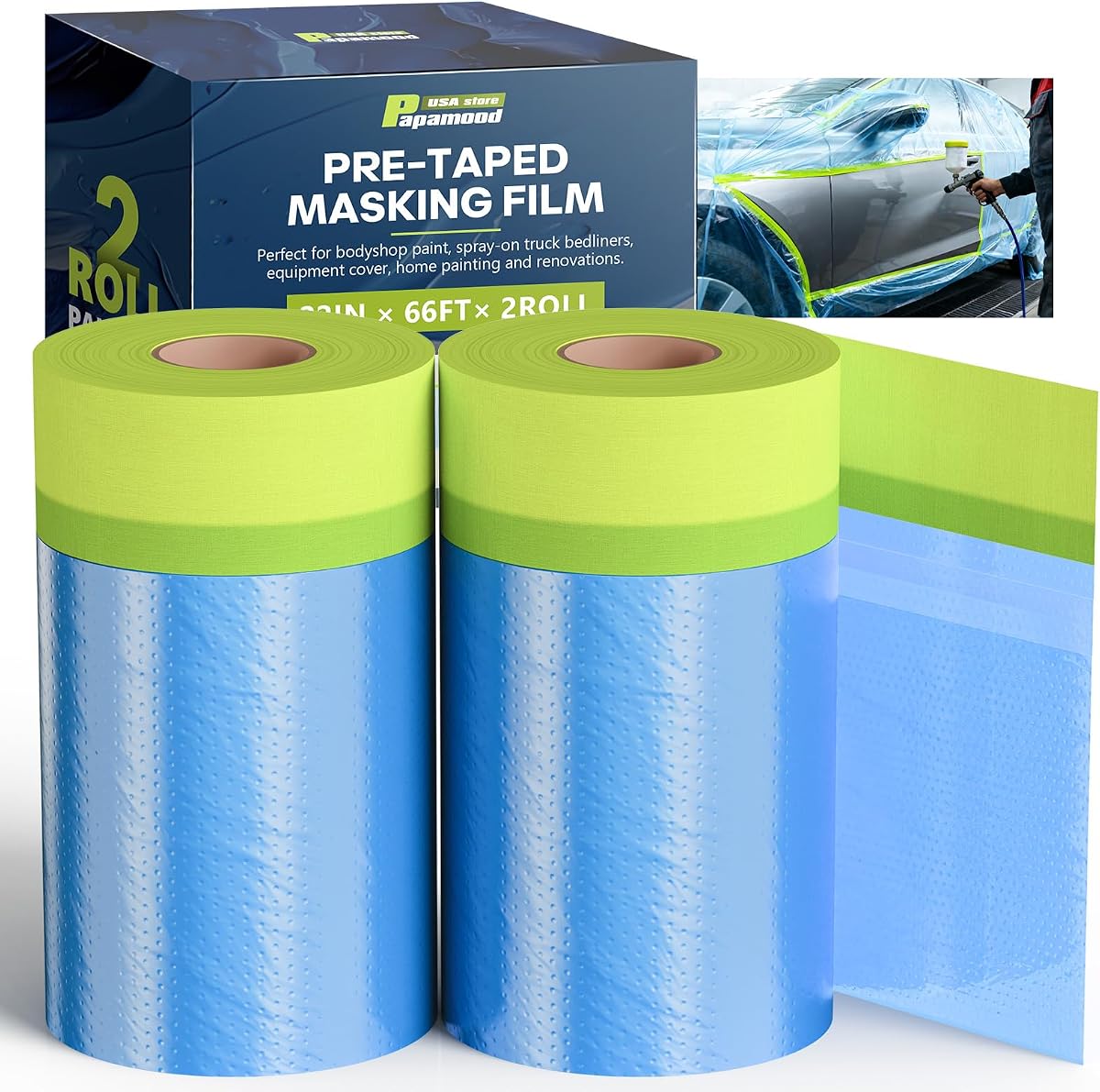
This pre-taped automotive masking film is a specialized alternative to conventional plastic-sheeting tape, with a 4.4 rating. Each package includes two 22-inch by 66-foot rolls of tear-resistant HDPE film with a built-in edge of heat-resistant rubber adhesive, combining temporary protection and masking in one product.
We may earn a commission when you buy through this link, at no additional cost to you.
The film is intended for automotive and home painting, dust protection, and surface shielding. It can adhere to smooth or lightly textured walls, trim, floors, tile, marble, metal, plastic, glass, and rubber. Because the tape and film arrive together, a single person can deploy the material quickly and cut it to the size needed for each section.
The listed performance is tailored to painting rather than long-term structural sealing. It withstands 230 degrees Fahrenheit for 30 minutes without shrinking or melting, and the adhesive is designed to remove cleanly within 30 days. It should therefore not be confused with a polyethylene vapor barrier tape or a UV-resistant greenhouse patch, and its temporary removal window is an important part of the product's intended use.
This is the right option when the plastic film is being used to protect a room, vehicle, cabinet, or fixture during painting rather than to repair a damaged vapor barrier. The integrated adhesive edge reduces the need for separate masking tape and makes large-area coverage faster. For permanent greenhouse or moisture-control work, choose a dedicated film tape from the rest of this list.
The pre-applied adhesive edge allows the film to be positioned and secured in one motion. This saves time and simplifies large masking jobs compared with attaching ordinary plastic with separate tape.
The material is specified to withstand 230 degrees Fahrenheit for 30 minutes without shrinking or melting. This makes it a practical temporary shield for automotive painting and related high-temperature finishing work.
We may earn a commission when you buy through this link, at no additional cost to you.
The best tape for plastic sheeting depends on the material, installation environment, size of the repair, and expected exposure. Narrowing those priorities first prevents choosing a tape that is visually ideal but lacks the adhesion or weather resistance needed for the job.
Polyethylene-backed tape is a natural match for polyethylene film because the surfaces are chemically compatible and the backing can remain flexible in changing temperatures. The 9-mil products in this guide offer heavier construction for seams, overlaps, and crawl space barriers, while the 6.3-mil greenhouse tape uses a lighter transparent film better suited to routine patching. Choose backing thickness according to handling stress rather than appearance alone.
A high-tack acrylic adhesive is well suited to clean polyethylene, construction surfaces, and long-term moisture-control seams. Aggressive adhesion improves initial holding power but should be paired with careful alignment because repositioning can weaken the bond or leave residue. Red construction tape offers especially strong adhesion, yet the manufacturer warns that it may be difficult to remove, making it better for utility applications than visible greenhouse film.
Width controls how much damaged material the tape can bridge and how much overlap remains around a tear. Four-inch rolls suit ordinary seams, six-inch rolls cover larger areas, and two-inch strips work well for small punctures. Length affects how many roll changes a project requires. The 263-foot greenhouse tape is ideal for repeated small repairs, while 180-foot vapor barrier rolls suit long, continuous installations.
Outdoor sheeting must withstand sunlight, rain, wind, and temperature changes. Most dedicated vapor barrier and greenhouse tapes in this guide advertise waterproof or moisture-resistant construction and UV-resistant coatings. Weather resistance is especially important for greenhouse film, crawl space liners, exterior masking, and temporary roofs. A general indoor tape may handle a light repair, but it offers less protection when ultraviolet exposure and seasonal movement are present.
Clear polyethylene tape is usually the most discreet choice for greenhouses and transparent coverings because it allows light to pass through. White vapor barrier tape is effective in concealed crawl spaces and construction barriers, where visibility is less important. Red construction tape stands out strongly and signals a temporary or utility repair. Appearance should be weighed against adhesive strength, but a greenhouse repair should generally avoid conspicuous opaque patches when clear film is available.
The strongest plastic-sheeting tape may still underperform if it is asked to bond to an unsuitable surface. Dedicated products commonly target clean polyethylene and may also state compatibility with wood, metal, concrete, insulation, or foil. The pre-taped masking film is designed for temporary painting protection rather than permanent seams. Confirm that the film, adjacent surface, and repair environment match the manufacturer's listed applications before purchase.
Clean, dry surfaces produce more consistent adhesion than dusty, damp, or contaminated plastic. Overlap polyethylene sheets sufficiently, center the tape over the joint, and press firmly across the full width; a roller can improve contact where appropriate. Some installations also benefit from tape on both sides of a larger crack. Avoid stretching the material during application because unnecessary tension can encourage edge lifting later.
Permanent seam tape, removable tape, and pre-taped masking film serve fundamentally different purposes. Vapor barrier and greenhouse products are designed to remain in service through changing weather, while the automotive masking film is intended for temporary protection and is specified to remove cleanly within 30 days. Using a temporary product for a long-term moisture barrier could create maintenance problems, while using permanent tape for short-term painting could leave unnecessary residue.
Begin by identifying the damaged or overlapping area and determining whether the job calls for a seam seal, patch, vapor barrier, greenhouse repair, or temporary masking film. Remove loose dirt, moisture, oil, and debris, then allow the plastic and bonding surface to become completely dry. Dirty or damp film can reduce adhesion and cause the tape to lift sooner than expected.
For a standard seam, position the polyethylene sheets with adequate overlap, align the tape over the joint, and press it down firmly from one end to the other. Avoid repeatedly lifting or repositioning the strip. On a large crack or tear, bridge the damaged area with tape and apply firm pressure across the full width; the manufacturer of the two-inch greenhouse tape recommends applying tape on both sides of larger cracks for maximum effectiveness.
After installation, inspect the perimeter and corners for bubbles, wrinkles, or edge lift, then correct those areas before they become larger gaps. Store unused tape at normal temperature and humidity in a ventilated area away from direct sunlight. For painted or delicate surfaces, test a small section first, especially with aggressive construction adhesives that may be difficult to remove.
A 9-mil polyethylene tape with a strong acrylic adhesive is generally well suited to vapor barrier seams because it combines a compatible backing with dependable holding power. The 4-inch by 180-foot crawl space tape and the white TapeManBlue polyethylene tape are particularly relevant choices. Clean the surfaces thoroughly, overlap the sheets, and apply firm pressure across each seam.
Ordinary packing tape may provide a temporary repair, but it is not designed for the same UV exposure, temperature changes, or physical stress as dedicated greenhouse repair film. A clear polyethylene tape designed for UV resistance and weather exposure is a better long-term choice. Replace the patch if it lifts, wrinkles, or tears around the damaged area.
Clear tape is generally preferable for visible greenhouse film because it blends with the covering and allows light transmission. White tape is often more practical in crawl spaces, basements, and construction barriers where the seam will be concealed. The material compatibility and adhesive strength should matter more than color when permanent moisture protection is the goal.
A four-inch roll provides useful overlap for ordinary rips and seam reinforcement, while six inches gives better coverage for a larger tear or stressed joint. A two-inch strip is most appropriate for small punctures and narrow damage. For a broad rupture, using tape on both sides can strengthen the repair when the product instructions recommend it.
Vinyl tape is not featured in this guide, and its performance can vary considerably depending on the polyethylene film, adhesive formulation, and installation conditions. Products specifically listed for polyethylene and plastic sheeting provide a more defensible starting point. Always verify adhesion, UV resistance, and surface compatibility before using a tape outside its stated purpose.
Start with clean, dry surfaces and avoid stretching the tape as you apply it. Center the strip over the entire seam, press firmly along every section, and use a roller where appropriate. A wide roll can also reduce exposed edges, while proper overlap helps distribute tension across more of the plastic film.
Pre-taped masking film is designed primarily for temporary painting and dust protection, with a stated clean-removal window of 30 days. It is not the appropriate choice for a permanent crawl space, greenhouse, or vapor barrier seam. Use dedicated polyethylene seam or repair tape when long-term service is required.
Painting over a repair may be possible once the adhesive has established a secure bond, but the tape's coating and adhesive should be checked for paint compatibility. A clear or white polyethylene tape may accept some finishes, while aggressive red construction tape can be difficult to remove or may resist coating. Test an inconspicuous section and allow proper drying before exposing the repair to weather.
The TapeManBlue 4 inch by 180 foot white polyethylene tape offers the best balance of versatility, construction, and outdoor usability, while the 4 inch by 180 foot crawl space seal tape stands out for dedicated moisture-control work with a high-tack acrylic adhesive. The six-inch clear greenhouse tape is the premium choice for broad, visually discreet repairs to plastic coverings.
Prioritize compatibility with the actual polyethylene film, backing strength, weather exposure, and the dimensions of the repair. Long seams favor 180-foot vapor barrier rolls, frequent small greenhouse damage favors the 263-foot option, and visible tears benefit from a wider clear patch. Construction tape and pre-taped masking film are useful specialty choices when strength or temporary protection is the primary need.
Before purchasing, confirm the dimensions, adhesive compatibility, and listed uses on the current product page. Availability, seller details, and prices can change over time, so checking the latest listing helps ensure that the selected tape still matches the size and environment of your planned project.