
WIPEMIK P15 15.6-inch Laptop
4.6Editor score
16GB RAM, 256GB SSD
15.6-inch 1080p IPS display
Five-percent narrow bezels
A laptop for grad school must balance dependable academic software, comfortable long study sessions, reliable connectivity, and enough power for research that extends beyond web browsing. The best choice depends on your field, workflow, and mobility, but screen quality, memory, battery life, and input design deserve careful attention before purchase.
This guide compares ten laptops designed for students, professionals, and everyday productivity. We evaluated the supplied processor, memory, storage, display, connectivity, battery, port, and feature information, then considered how each configuration could support lectures, research, writing, virtual meetings, and project work.
Each review identifies the strongest use case and important trade-offs rather than treating one model as ideal for everyone. Three standout picks lead the guide, while the remaining options provide alternatives for Chrome OS users, travelers, and budget-conscious students; prices and availability change over time.
4.6Editor score
4.8Editor score

5.0Editor score
As an Amazon Associate we earn from qualifying purchases.
The table below compares the ten laptops by core hardware, display, portability, and academic-use considerations, making it easier to identify the configuration that best matches your graduate workload.





The Aurant 15.6 Inch Laptop pairs an AMD Ryzen R5 processor with 8GB of RAM and a 128GB SSD, earning a 5.0 rating among the supplied products. Its four-core, eight-thread design, 2.00GHz base frequency, and 3.60GHz maximum boost provide a useful foundation for research, writing, document editing, web browsing, and ordinary multitasking.
We may earn a commission when you buy through this link, at no additional cost to you.
This configuration is especially interesting because it delivers more memory and more visible CPU threads than several competing entries. The backlit full-size keyboard includes a separate numeric keypad, which can help students entering quantitative data, while fingerprint unlock offers a convenient way to protect research and personal files. Two USB 3.0 ports, HDMI, an audio jack, and a MicroSD slot cover most daily connection needs.
The main compromises are the modest 128GB SSD and a 15.6-inch HD panel rather than a higher-resolution display. Storage can fill quickly with research PDFs, datasets, course archives, and software, so students should maintain organized cloud or external storage. The HD screen is suitable for general coursework, although detailed design work or prolonged high-resolution media editing may benefit from a sharper panel.
Even with those limitations, this is a compelling recommendation for a graduate student who wants a capable Windows laptop without paying for a premium processor class. Its light 1.6-kilogram body, 5GHz Wi-Fi, backlit keyboard, and generous port selection make it particularly practical for commuting between campus, home, and the library. It earns the Best Budget badge by balancing performance and practical academic features.
The eight-thread Ryzen R5 can divide routine research workloads across multiple cores, making it a stronger fit for heavy browser use, document work, and simultaneous academic applications than a basic dual-core configuration. The processor also reaches 3.60GHz when higher workloads call for additional speed.
The backlit full-size keyboard and independent numeric keypad distinguish this model from many compact study laptops. Those details are especially helpful in dim libraries, late-night writing sessions, and assignments involving spreadsheets or statistical entry.
We may earn a commission when you buy through this link, at no additional cost to you.
The NIMO 15.6-inch AI Ready Laptop stands out as the most balanced configuration in this guide, combining 8GB of RAM, a 256GB SSD, and an Intel N150 quad-core processor. Its 4.8 rating is the highest among the models with a numerical rating, while the supplied specifications add several features particularly relevant to graduate students.
We may earn a commission when you buy through this link, at no additional cost to you.
The laptop includes a Full HD anti-glare display, a 180-degree lay-flat hinge, Wi-Fi 6, Bluetooth 5.3, a backlit US keyboard, a physical webcam shutter, and a fingerprint reader. Its 65W USB-C Power Delivery charging setup can add up to two hours of use in 15 minutes according to the supplied information. Dual full-function USB-C ports, three USB-A ports, HDMI, and a MicroSD slot reduce the need for adapters.
The N150 is intended for school tasks, web-based research, note organization, and light productivity rather than intensive rendering or large local datasets. That limitation is reasonable for many graduate programs, where research happens through cloud services, web applications, office documents, and communication platforms. Storage and memory are more generous than on most competing N150 models in the list, while expansion options add flexibility.
This is the best overall recommendation for students who want a full-featured Windows 11 laptop that is still light enough to carry. The 3.7-pound weight, 0.76-inch profile, 8GB of memory, and 256GB SSD create a useful balance for daily commuting and sustained academic work. Its two-year warranty and extensive connectivity make it especially attractive for graduate students who want fewer dongles and a more permanent setup.
Eight gigabytes of RAM gives the NIMO more room for browser-based research, a word processor, meeting software, and reference documents than the 4GB configurations elsewhere. The supplied M.2 and MicroSD expansion options also make the system easier to adapt as research files and archived coursework accumulate.
Two full-function USB-C ports support charging and display output, while HDMI and three USB-A ports cover common peripherals. This selection is particularly useful for group meetings, research presentations, external storage, and laboratory equipment that still relies on traditional USB connections.
We may earn a commission when you buy through this link, at no additional cost to you.
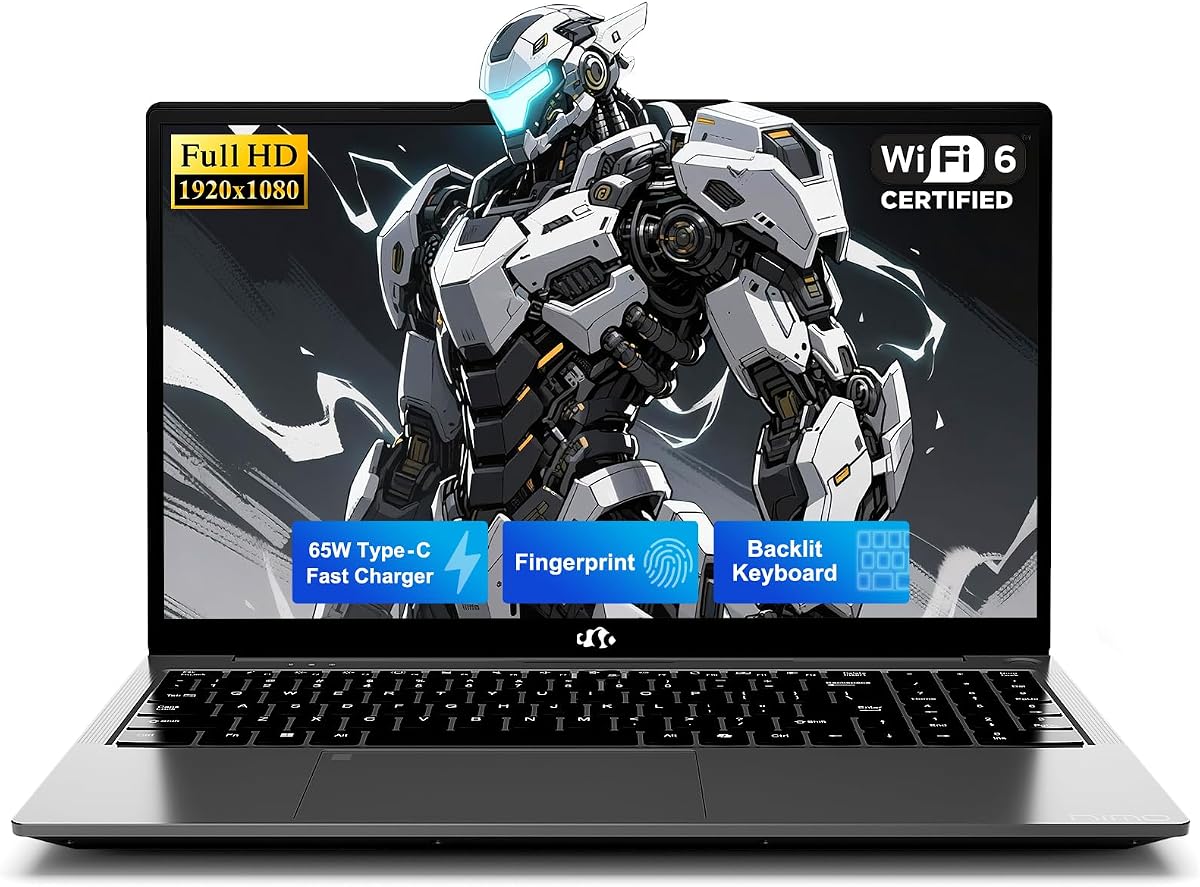
The WIPEMIK P15 is the strongest premium hardware pick because it combines 16GB of RAM with a 256GB SSD, 15.6-inch 1080p IPS display, and a slim 1.75-kilogram body. Its 4.6 rating and 16GB memory distinguish it from the 4GB and 8GB alternatives, making it well suited to students who keep many academic applications and documents open.
We may earn a commission when you buy through this link, at no additional cost to you.
The 6500Y processor can operate up to 3.4GHz, while the Full HD IPS panel, narrow 5mm bezels, and four stereo speakers create a capable everyday entertainment and study environment. A physical privacy slider gives users visible control over the front camera. The 21mm-thick chassis remains portable, and the supplied specification describes a cooling fan and heat pipes for sustained operation.
Its port selection includes USB-C charging, two USB 3.0 ports, one USB 2.0 port, an HD port, a MicroSD slot, an audio jack, and a Kensington lock slot. Wi-Fi 5 is less advanced than Wi-Fi 6 found on several competing models, but it remains suitable for standard campus and home networks. The product information does not provide a precise battery-life figure, so buyers should not assume a specific endurance level.
Choose the P15 when memory capacity, a sharp display, and understated portability are priorities. It is a compelling option for graduate students running research applications, managing large document collections, or working across many browser and office tabs. It earns the Best Premium badge not because of a luxury design, but because its specification mix offers the most generous memory and one of the strongest displays in the group.
Sixteen gigabytes of RAM is the highest memory figure among these picks and provides comfortable headroom for document-heavy workflows. It also reduces the likelihood that a student must close tabs or applications to maintain responsiveness while working with research references and communication tools.
The 1920 by 1080 IPS display provides more usable detail than the HD-resolution alternatives. That difference can improve text readability, document navigation, and media viewing, while the narrow bezels preserve a relatively modern appearance despite the larger 15.6-inch form factor.
We may earn a commission when you buy through this link, at no additional cost to you.
This HP 14-inch productivity laptop offers a notably complete graduate-student package, earning a 4.6 rating. It combines Windows 11 Pro, a lifetime Microsoft Office suite, Wi-Fi 6, an Intel N150 processor, and a generous accessory bundle with a 500GB portable external drive.
We may earn a commission when you buy through this link, at no additional cost to you.
The useful extras extend beyond storage. The bundle includes wireless earbuds, a USB extension cord, an HDMI cable, a mouse pad, and a wireless mouse, reducing the need to purchase several basics separately. The anti-glare 14-inch HD display, 720p camera, and dual-array microphones support online classes, research meetings, and remote collaboration.
The central compromise is 4GB of LPDDR5 RAM. Although the processor is efficient and the 128GB internal UFS drive offers quick access to the operating system, heavy multitasking may be less comfortable than on the NIMO or WIPEMIK. Also, the advertised 628GB total depends on the included 500GB external drive rather than a single large internal SSD.
This model is a strong choice for a graduate student who values Windows Pro capabilities, bundled software, accessories, and a generous combined storage figure. It is less attractive for intensive local data work, but for document-centered study, online research, and frequent virtual meetings, the package is unusually complete.
Windows 11 Pro adds management and security features that may be useful for institutional work, while the included Microsoft Office suite provides familiar tools for writing, spreadsheets, and presentations. These features reduce the immediate setup burden for a new student.
The included external drive, mouse, earbuds, HDMI cable, and USB extension cord cover several common needs. The accessories may prove particularly useful during the first weeks of term, when a student is setting up a dorm room, office, or hybrid study arrangement.
We may earn a commission when you buy through this link, at no additional cost to you.
The HP 14-inch HD Chromebook is designed for students whose academic work is centered on web-based tools. Its 4.4 rating, Chrome OS environment, Intel Celeron N4120 processor, 4GB of LPDDR4x memory, and 64GB eMMC provide a straightforward platform for documents, research, communications, and online learning.
We may earn a commission when you buy through this link, at no additional cost to you.
The quad-core N4120 can divide work among four processing threads, while the anti-glare 1366 by 768 display helps with text-heavy schoolwork. Connectivity includes two USB 3.0 Type-A ports, one USB 3.0 Type-C port, HDMI, and a headphone jack. The product information also highlights a webcam and an advertised 14-hour battery life.
Chrome OS is the primary limitation for some graduate students. It integrates Google Chrome and Android applications and works well for cloud productivity, but it is not a direct substitute for a conventional Windows installation when a course or lab requires specialist desktop software. The 64GB eMMC also leaves little room for local media, software packages, or large datasets.
For a student focused on research through institutional websites, online journals, Google Workspace, and browser-based course platforms, this Chromebook is a capable and potentially long-lasting companion. It is best suited to lightweight, cloud-first workflows rather than demanding local computing.
Chrome OS keeps the experience focused on web applications, Android tools, and automatic online workflows. That design can make everyday class notes, email, research, and group communication feel straightforward without the learning curve associated with a full desktop operating system.
The inclusion of both USB-A and USB-C preserves compatibility with common flash drives, accessories, and external displays. HDMI is also helpful for presentations, while the headphone jack supports private listening during commutes or shared study spaces.
We may earn a commission when you buy through this link, at no additional cost to you.
The HP Chromebook 14, identified as model 14a-na0226nr in Mineral Silver, focuses on portability and endurance. It has a 4.3 rating, an Intel Celeron N4120 quad-core processor, 4GB of RAM, 64GB of eMMC storage, and a thin 14-inch anti-glare display.
We may earn a commission when you buy through this link, at no additional cost to you.
Its strongest advertised feature is up to 14 hours of battery life, supported by HP Fast Charge that can bring the laptop from zero to 50 percent in approximately 45 minutes. That combination suits students moving between long classes, research sessions, libraries, and commutes without seeking an outlet after every task. Custom-tuned stereo speakers add value for lectures, media, and group study.
The 1366 by 768 resolution is adequate for ordinary reading and browser use but offers less detail than a Full HD panel. Storage remains modest, and the 2022 model designation may make it less appealing to buyers seeking a recent processor generation. The Chrome OS focus also remains the central consideration for software compatibility.
Despite those limitations, this is a good recommendation for a student who prioritizes long battery life, fast recharging, and a portable form. It is particularly suitable for web-based coursework and light productivity. The multi-touch touchpad, one-year limited hardware warranty, and ENERGY STAR certification further support its practical student positioning.
An advertised 14-hour battery runtime can cover a full schedule of classes, office hours, and study sessions. Fast Charge adds useful flexibility by allowing a shorter top-up before a meeting, although actual results can vary with settings, network conditions, and workload.
The thin 14-inch design is easier to carry than many full-size laptops and retains a full-size keyboard. Chrome OS offers a familiar browser-centered environment for coursework that relies on online documents, communication, and cloud applications.
We may earn a commission when you buy through this link, at no additional cost to you.
The HP 2026 Essential Laptop is a portable Windows 11 option for students who regularly move between classes and study locations. It carries a 4.4 rating and pairs an Intel N150 processor with 4GB of LPDDR5 memory, 128GB of UFS storage, and a compact 14-inch anti-glare display.
We may earn a commission when you buy through this link, at no additional cost to you.
Its 3.24-pound weight and 0.71-inch thickness make it one of the lighter full Windows options in the guide. The display provides 250 nits of brightness and a 79 percent screen-to-body ratio. Windows 11 Home and a one-year Microsoft 365 Personal subscription support an immediate transition into research, writing, and communication tasks.
Modern connectivity is another strength. Wi-Fi 6, Bluetooth 5.4, a 10Gbps USB-C port with DisplayPort 1.2, two USB-A ports, HDMI, an audio jack, and an SD card reader cover most student needs. The supplied information lists up to 11 hours of video playback and 7.5 hours of mixed use or wireless streaming.
The 4GB memory and 128GB storage are the main constraints. This laptop is best for light productivity and cloud-oriented work rather than memory-intensive analysis. It earns a place in the guide because its portability, modern ports, included software, and long stated endurance form a well-rounded package for a student who studies in several locations.
At 3.24 pounds, the Essential Laptop is easier to carry than most 15.6-inch models in the guide. Its compact dimensions also reduce the amount of desk or bag space required, making it suitable for shared offices and crowded study areas.
Windows 11 Home and Microsoft 365 Personal cover common academic and communication needs. Wi-Fi 6, Bluetooth 5.4, HDMI, and DisplayPort-capable USB-C make it easier to connect to campus networks, peripherals, and presentation displays.
We may earn a commission when you buy through this link, at no additional cost to you.
The HP 14-inch Office Laptop is a straightforward choice for students whose work centers on web applications, word processing, and communication. It has a 4.3 rating, an Intel N150 quad-core processor, 4GB of LPDDR5-4800 memory, 128GB of UFS storage, and a one-year Office 365 inclusion.
We may earn a commission when you buy through this link, at no additional cost to you.
Its 14-inch anti-glare display offers 250 nits and a 79 percent screen-to-body ratio, making it practical for reading, browsing, and joining online seminars. The HP True Vision 720p camera includes temporal noise reduction, while the dual-array microphones and AI Noise Reduction are aimed at clearer virtual meetings in imperfect acoustic environments.
The same hardware limitations as many compact N150 laptops apply. Four gigabytes of RAM may feel restrictive when many browser tabs, communication tools, and documents are open, and 128GB offers limited room for locally installed software. The user should also confirm application compatibility for any software requiring a conventional Windows installation or demanding hardware.
This model is a good alternative for a student who values an included productivity subscription, modern wireless standards, and meeting-focused features in a compact chassis. It is less compelling for intensive workloads, but it handles everyday graduate-study tasks with a sensible mix of portability and functionality.
The 720p camera, dual microphones, and AI Noise Reduction support the communication requirements of hybrid graduate programs. These features are most useful for seminars, supervisory meetings, interviews, and collaborative sessions where clear voice pickup matters.
The included Office 365 subscription and Windows-based environment make the laptop approachable for students accustomed to mainstream office tools. Its compact size and full-size keyboard balance on-the-go access with comfortable everyday typing.
We may earn a commission when you buy through this link, at no additional cost to you.
The ASUS Vivobook 14-inch FHD laptop stands out for its 2.87-pound weight, 0.71-inch thickness, and 1920 by 1080 display. It is a potentially compelling ultraportable option for graduate students who carry a computer between campuses, conferences, and libraries, although the supplied data does not include a numerical customer rating.
We may earn a commission when you buy through this link, at no additional cost to you.
Its 14-inch Full HD LED panel offers more detail than the HD-resolution alternatives in the guide, which can benefit document reading and media viewing. The Intel Celeron N4500 operates up to 2.8GHz with Intel UHD Graphics, while 4GB of DDR4 RAM and 64GB of eMMC cover basic computing needs. The product also includes 1TB of cloud storage.
Its limits are substantial for demanding graduate workloads. The processor belongs to an entry-level category, the 4GB memory is small for intensive multitasking, and 64GB of local storage leaves little room for installed applications or large research collections. Cloud storage helps, but it does not replace a practical local working drive for active files.
The Vivobook is best recommended for students with cloud-first workflows who value sharpness and portability over processing power. Its selection of USB-C, USB-A, HDMI, audio, Wi-Fi, Bluetooth, and a 720p camera covers essential daily needs. Buyers should check their specific academic software requirements before committing to this entry-level configuration.
A Full HD panel within a 2.87-pound chassis is a useful combination for a student who reads and edits documents away from a desk. The 1920 by 1080 resolution provides a clearer workspace than the 1366 by 768 panels used by several competing models.
The included cloud storage aligns with a workflow that keeps active documents online and syncs them across devices. This approach is convenient for writing and collaboration, although locally installed software and offline files will remain limited by the 64GB eMMC.
We may earn a commission when you buy through this link, at no additional cost to you.
The HP Everyday Slim Laptop offers a straightforward Windows 11 configuration centered on an Intel N150 processor, 4GB of RAM, and a 128GB SSD. It has a 5.0 rating and includes Microsoft 365, making it a practical option for graduate students who want essential software and a familiar operating system without a complex setup.
We may earn a commission when you buy through this link, at no additional cost to you.
The supplied information highlights a full-size keyboard, multi-touch HP Imagepad, and a dedicated Microsoft Copilot key. A 720p HP True Vision camera with temporal noise reduction and dual-array microphones supports virtual meetings, while the long battery life claim makes the slim form factor more practical for travel and long days on campus.
Limited information is provided about the display, port selection, weight, and exact battery runtime, so buyers should compare those details before purchase. The 4GB memory and 128GB storage also place it below the NIMO and WIPEMIK configurations for simultaneous academic applications and locally stored research materials.
This laptop is best for students with a straightforward, cloud-supported workload involving writing, email, browsing, office applications, and online meetings. It avoids unnecessary complexity and earns a place in the guide for its strong rating, included Microsoft 365, Windows 11 environment, and communication-oriented features. It is a sensible fallback when a more established HP configuration is unavailable or unnecessary.
The 720p camera, temporal noise reduction, and dual-array microphones help a student present clearly during remote seminars and meetings. A dedicated Copilot key also makes AI-assisted writing, note organization, and document exploration easy to access from the keyboard.
Windows 11, Microsoft 365, and a full-size keyboard cover the core needs of most writing and communication tasks. The slim format makes the laptop easier to move between study locations, while the multi-touch Imagepad provides familiar navigation and gesture support.
We may earn a commission when you buy through this link, at no additional cost to you.
The right graduate-school laptop depends on your software, research demands, study locations, and tolerance for compromises. Evaluate the following factors before choosing a model, because the most attractive specification on paper may not match your daily workflow.
The processor influences how quickly a laptop handles simultaneous applications, statistical tools, reference documents, browser tabs, and virtual meetings. The AMD Ryzen R5 option provides a four-core, eight-thread design with a 3.60GHz maximum boost, while the Intel N150 options use four cores and four threads with up to a 3.6GHz boost. The WIPEMIK 6500Y reaches up to 3.4GHz, and the Celeron N4120 and N4500 models are positioned for more basic workloads.
Choose a processor based on the software your program requires. Basic writing and browser-based research may work on an entry-level chip, while large datasets, local simulations, and media workflows benefit from more threads and memory. Do not assume that a higher clock speed alone guarantees smooth performance.
RAM determines how much work the computer can keep active without relying heavily on slower storage. The 8GB NIMO and 16GB WIPEMIK offer the most comfortable headroom in this group, while the 4GB models are adequate for lighter tasks but may struggle with many open applications. Memory is especially important for large browser-based research environments, where numerous tabs, PDFs, and meeting applications can consume substantial capacity.
Prioritize 8GB or more when possible. If a laptop has only 4GB, check whether it can be upgraded and consider using cloud storage to reduce local pressure. A larger memory allocation is generally more useful to a graduate student than a premium exterior feature.
Storage needs vary dramatically by discipline. A student working from web applications may need little internal capacity, while someone storing datasets, software packages, videos, or large local archives needs considerably more. The guide includes 64GB eMMC options, 128GB SSD and UFS models, a 256GB SSD in the WIPEMIK and NIMO, and a 628GB combined setup that includes a 500GB external drive.
Look for at least 128GB when possible and budget for external or cloud storage when your work produces large files. Also distinguish internal storage from a bundled drive: the HP productivity package has more total space, but only 128GB is built into the laptop itself.
A graduate student may stare at a screen for many hours, making readability as important as raw processing power. The 1920 by 1080 IPS display in the WIPEMIK and 14-inch Full HD display in the ASUS Vivobook provide more detail than the 1366 by 768 HD panels found on several HP models. Anti-glare coatings, which appear across multiple options, can improve comfort in bright libraries and shared offices.
Choose higher resolution when reading dense documents, comparing images, or editing visual material. For ordinary text, web pages, and presentations, an HD anti-glare panel may be sufficient. Screen size should be balanced against weight because a larger display can become tiring to carry on a long commute.
Battery endurance determines whether a laptop can support a full day of classes, office hours, and research without a charger. The HP Chromebook 14 advertises up to 14 hours of battery life, the HP Essential Laptop lists up to 11 hours of video playback, the ASUS Vivobook lists up to 10 hours, and the NIMO supports rapid USB-C charging. Actual runtime varies with workload, screen brightness, wireless conditions, and power settings.
Consider the complete day rather than a single isolated runtime claim. A lightweight 14-inch model may be easier to carry between buildings, while a 15.6-inch screen can be more comfortable for prolonged work. Bring a charger for long travel or research-intensive days even when a long battery estimate is advertised.
Graduate work often involves external monitors, wired networking, presentation adapters, external drives, and specialist lab equipment. The NIMO provides two full-function USB-C ports, three USB-A ports, HDMI, and a MicroSD slot. The WIPEMIK includes USB-C, three USB-A connections, HDMI, MicroSD, audio, and a Kensington lock. Wi-Fi 6 appears on several HP models, while the WIPEMIK uses Wi-Fi 5.
List the peripherals you expect to use before purchasing. USB-C with DisplayPort can reduce the need for adapters, but an included HDMI cable may be more convenient for immediate use. Check whether a laboratory requires a specific connection type that the laptop does not include.
The operating system can be as important as the processor. Chrome OS supports browser-based workflows, Google services, and Android applications, making it well suited to many online courses. Windows 11 provides broader compatibility with desktop research tools, statistical programs, virtual environments, and institutional software. Before buying, verify licensing, hardware requirements, and any departmental IT restrictions.
Choose Chrome OS only when your required applications run comfortably in the browser or through Android compatibility. Otherwise, favor a Windows model. Also check whether your program expects remote access to university servers, a Linux-compatible environment, or specialized laboratory software before finalizing a choice.
Small details can materially improve a long academic day. Backlit keyboards help with late-night writing, the Aurant includes a useful numeric keypad, and multiple models offer fingerprint login or a physical camera privacy control. Cameras, microphones, speakers, and noise-reduction features influence the quality of lectures, interviews, and supervisory meetings. Accessories such as a mouse, earbuds, HDMI cable, or external drive can make the initial setup easier.
Prioritize the extras that match your routine rather than selecting a model solely for a long checklist. A frequent traveler may value privacy and charging features, while a data-focused student may benefit more from memory and storage. A comfortable keyboard and dependable webcam are useful across nearly every graduate-school workflow.
Begin by signing in, connecting to the university network, updating the operating system, and installing the software required by your program. Organize coursework into clear folders, enable automatic cloud backups for active documents, and verify that any external drive is configured to save work safely. For a Chromebook, confirm that your course tools and productivity applications work in the supported environment before the term begins.
Create separate profiles or browser workspaces for classes, research, and personal tasks to reduce notification clutter. Use the backlit keyboard, external display, or second monitor when long reading and writing are required. For presentations, test the USB-C, HDMI, microphone, camera, and power adapter before entering a teaching or meeting space, and keep a backup copy of critical files away from the laptop.
Care for the device by keeping vents clear, using a stable surface, and avoiding drinks near the keyboard or ports. Clean the screen with a soft microfiber cloth, protect the display with a sleeve during transport, and keep the storage system from becoming nearly full. For security, enable system updates, use a strong password or fingerprint, activate the camera privacy control when appropriate, and use a secure campus Wi-Fi network or a trusted VPN.
At least 8GB of RAM is preferable for a graduate student who runs a browser, word processor, reference database, and meeting application at the same time. The NIMO and WIPEMIK in this guide meet that target, with the WIPEMIK offering the most memory at 16GB. A 4GB model can handle lighter tasks, but heavy research and multitasking may feel constrained.
A Chromebook can be well suited to programs centered on web-based research, cloud office tools, and online coursework. Both HP Chromebook options in the guide provide 4GB of RAM, a 14-inch display, and Chrome OS. Before buying, confirm that your department's required software, research tools, remote-access systems, and course applications work in Chrome OS.
Most graduate-school tasks do not require a dedicated graphics card, particularly when work revolves around documents, web research, meetings, and standard office applications. Students in machine learning, 3D modeling, video production, or data visualization may need more graphics capability, and the lightweight processors in this guide are not intended to replace a specialized workstation.
A 14-inch model generally offers the strongest balance between usable screen area and portability. The HP models in this category are compact, while the ASUS Vivobook weighs only 2.87 pounds. A 15.6-inch laptop can be better for sustained document work but is usually heavier and may take up more room in a small bag or crowded study area.
Students should consider extra storage whenever their research involves large PDFs, datasets, media files, or locally installed software. A 128GB internal drive is modest for a multiyear academic archive, while 256GB provides more room. Cloud synchronization and an external drive can help, but active files should still be backed up in more than one location.
Windows 11 generally offers broader compatibility with specialist research and academic software, making it the safer choice when program requirements are uncertain. Chrome OS excels when all coursework is browser-centered and lightweight. Check departmental guidance and the operating system requirements of your essential applications before deciding.
A long advertised runtime can support a typical school day, but actual endurance depends on brightness, wireless activity, video calls, and processor load. The HP Chromebook 14 advertises up to 14 hours, while the ASUS Vivobook lists up to 10 hours. Treat these as maximum conditions rather than guarantees and carry a charger for demanding days.
Yes, especially for students who use external monitors, presentation equipment, laboratory instruments, or external storage. The NIMO offers the broadest listed selection, including two full-function USB-C ports and three USB-A ports. Check your expected peripherals and whether the school supplies adapters before choosing a model with a limited port layout.
The NIMO 15.6-inch AI Ready Laptop is the strongest all-around choice because 8GB of RAM, a 256GB SSD, a Full HD display, modern wireless standards, privacy controls, and extensive ports support a wide range of graduate workflows. The WIPEMIK P15 is the premium alternative for students who prioritize 16GB of memory, a sharp IPS display, and a slim 15.6-inch body.
The Aurant Ryzen laptop delivers the most attractive budget balance, combining an eight-thread Ryzen processor, 8GB of RAM, a backlit numeric keypad, and a light chassis. Chrome OS users can consider the HP Chromebook 14 for its long stated battery life, while the ASUS Vivobook appeals to travelers who prefer a Full HD screen and minimal weight.
Before purchasing, check current prices, software requirements, display needs, and available storage because prices and configurations change. Choose the laptop that fits your actual academic workflow rather than the model with the longest specification list, and confirm the latest operating details and warranty terms directly with the seller.