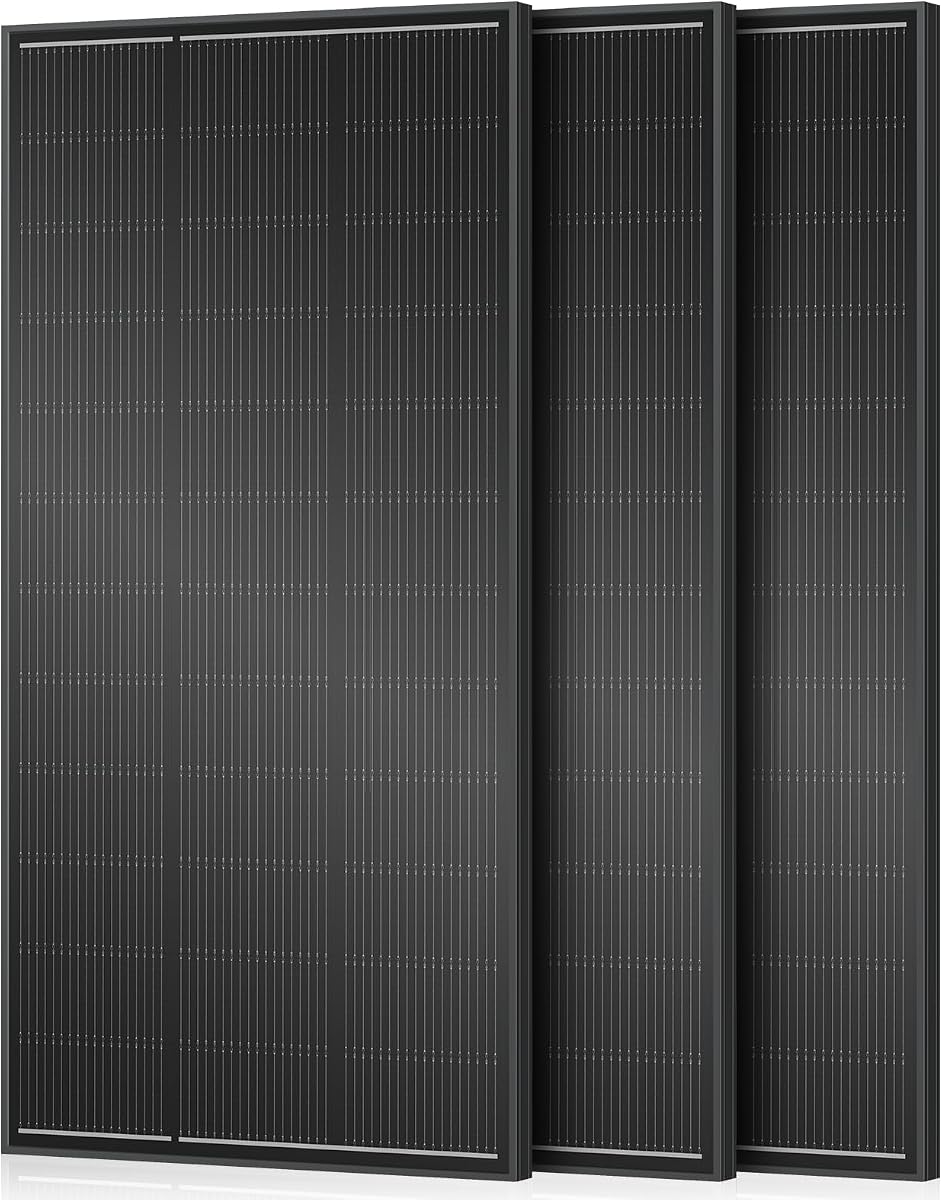
600 Watt 200W 3-Pack
5.0Editor score
25% EL-tested conversion efficiency
IP68 waterproof construction
Rigid aluminum mounting frame
This 600W solar panel guide compares efficiency, portability, durability, compatibility, installation needs, and output across ten models for camping, RVs, and
A 600W solar panel offers a practical way to expand portable power, support an off-grid battery system, or reduce dependence on grid electricity. However, the best model depends on cell efficiency, output voltage, weight, weather resistance, connector type, mounting style, and whether portability or permanent installation matters more than raw capacity.
This guide compares ten 600W solar panel configurations using the supplied specifications, ratings, construction details, and intended applications. It covers foldable panels, rigid monocrystalline modules, flexible ETFE panels, bifacial designs, complete kits, and multi-panel systems for RVs, boats, homes, camping, and emergency power.
The ranking shows how each option approaches the 600W category, from lightweight portable designs to rugged fixed installations and flexible panels for curved surfaces. Customer ratings are included where available, while products without a listed rating are not assigned a numerical score. Prices and availability can change, so confirm current details before purchasing.
5.0Editor score

5.0Editor score

4.2Editor score
The table below compares the ten featured 600W solar panel configurations by power, cell technology, physical construction, output, and primary installation method. It makes it easier to distinguish portable foldable models, rigid modules, flexible surfaces, bifacial panels, and full system kits.

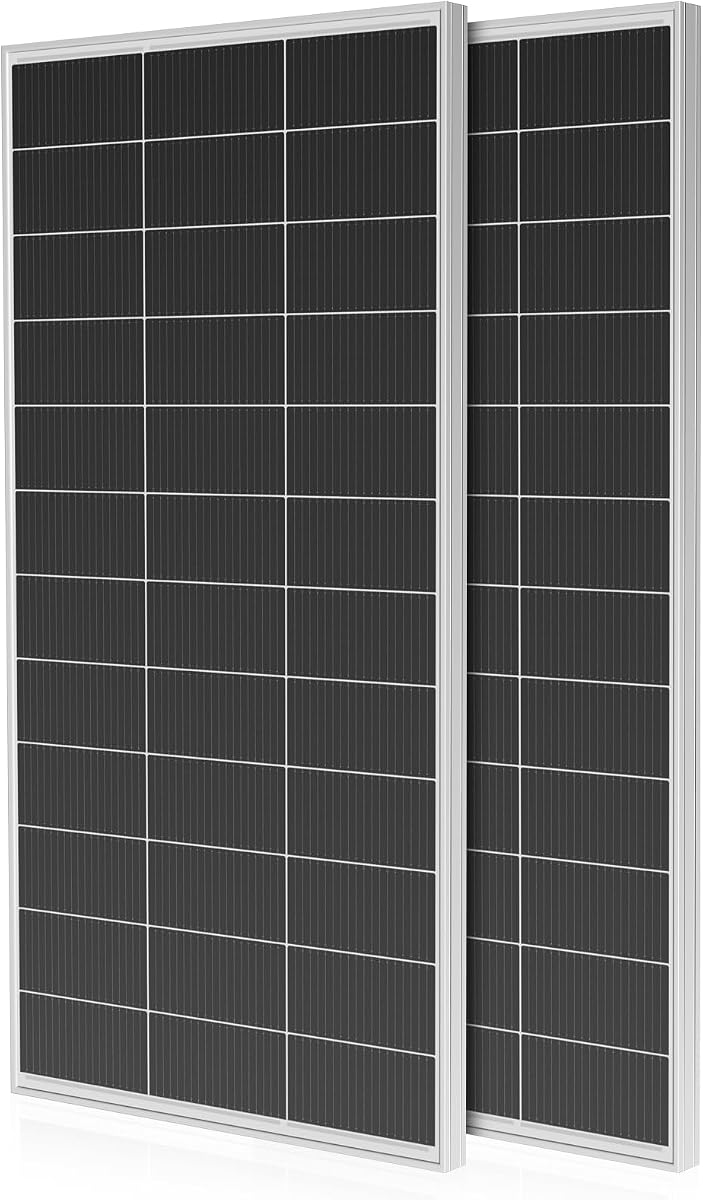

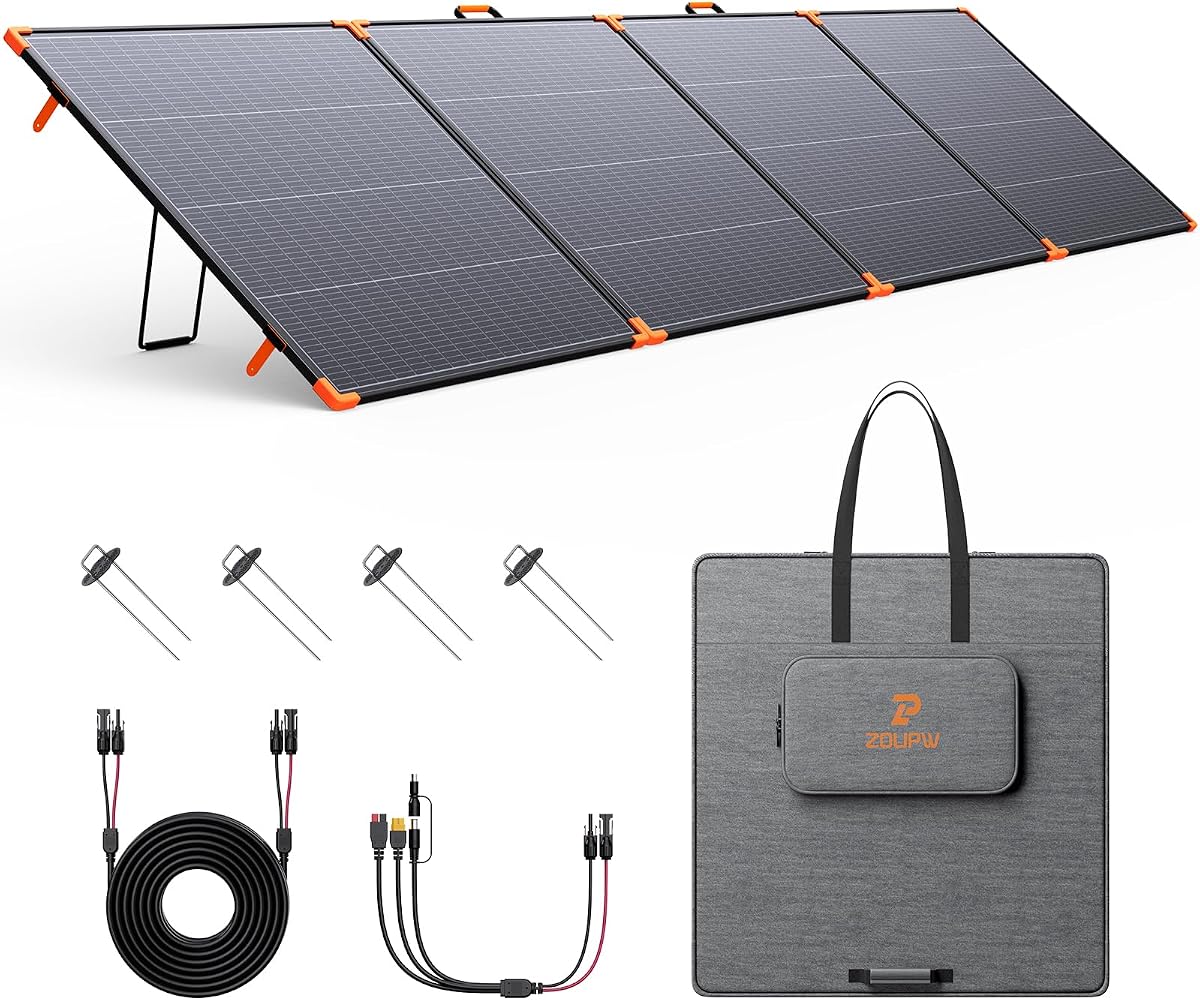


The EYONGPV 600W Foldable Solar Panel combines a 600W rating with HPBC monocrystalline cells, a book-style folding structure, and a 5.0 customer rating. Its standout combination of up to 26% conversion efficiency, portable construction, and practical setup hardware makes it an especially strong all-around option for travelers who need meaningful charging capacity without installing a permanent array.
We may earn a commission when you buy through this link, at no additional cost to you.
The panel uses advanced ETFE encapsulation and dual-layer EVA lamination for outdoor durability and UV protection. An integrated kickstand permits adjustment toward the sun, while built-in handles simplify carrying. Its 30A Anderson output and included 4.5-meter extension cable are designed to provide stable power transmission to compatible power stations, RV batteries, and 12V systems.
The main compromise is that a foldable 600W panel is naturally larger and heavier than a single rigid module, and its Anderson connection may not fit every power station without an appropriate adapter. Users should also provide an appropriate controller and electrical protection rather than treating panel output alone as a complete charging system.
This is a strong recommendation for RV trips, camping, hiking, emergency backup, and mobile power where portability and efficiency both matter. Buyers who need easy setup, flexible positioning, and compatibility with mainstream large power stations will find this model particularly compelling.
The 26% conversion efficiency and foldable format target a common portable-solar compromise: increasing usable area without requiring a permanently mounted rigid panel. The adjustable support helps maintain a favorable angle as the sun moves.
ETFE encapsulation, EVA lamination, and IP65 protection make the panel suited to outdoor travel. The long Anderson cable and 30A output also help position the panel away from vehicles or power stations where a short lead would be inconvenient.
We may earn a commission when you buy through this link, at no additional cost to you.
This configuration combines three 200W monocrystalline panels into a 600W system while retaining the flexibility to mount each module on a different surface. It carries a 5.0 rating and stands out for 18BB N-type cell technology, 25% EL-tested conversion efficiency, rigid aluminum frames, and an IP68 waterproof rating.
We may earn a commission when you buy through this link, at no additional cost to you.
Pre-drilled mounting holes allow the panels to fit a broad range of brackets and installation angles. The construction is listed for resistance to 2400 Pa winds and 5400 Pa snow loads, making it a practical option for rooftops, RVs, boats, and permanent off-grid installations where rigid panels are easier to secure.
The product is less convenient for spontaneous camping than a single foldable panel because there are three separate rigid units to transport and mount. The supplied guidance also limits parallel or series configurations to three panels, and says not to exceed the current capacity of connecting materials. Proper fusing, cable sizing, and compatible connectors remain essential.
This three-pack is an excellent value-oriented choice for installers who want modular placement and rigid-panel durability. It is especially suitable for RV roofs, boat installations, and off-grid projects that can benefit from distributing panels across several orientations or locations.
Three separate modules can be positioned where sunlight is available rather than concentrated on a single mounting plane. That flexibility is useful on larger vehicles, rooftops, and installations with partial obstructions.
The electroplated aluminum frame, pre-drilled holes, and stated wind and snow load resistance make the panels well suited to fixed brackets. A compatible charge controller and correctly sized connection hardware should still be included in the system plan.
We may earn a commission when you buy through this link, at no additional cost to you.
The ALLPOWERS SP039 is a six-section, 600W foldable panel designed for RV travel, rooftop mounting, and large solar generators. Its listed 44V output is a major feature for users who want a more capable portable charging surface, while its 4.2 rating reflects strong utility without the highest customer score in this group.
We may earn a commission when you buy through this link, at no additional cost to you.
Monocrystalline modules provide up to 23% conversion efficiency, and the flexible EVA and fiberglass construction is rated IP67 for protection against dust, water splashes, scratches, and brief immersion. The stated folded dimensions are 23.6 by 35.7 by 1.9 inches, and the weight is listed at 27.5 pounds, which is notably lower than many comparably capable glass portable panels.
This model does not lead the group in efficiency, and its 44V operating profile will not work with every battery or power station. Buyers should confirm the input voltage and connector requirements of their equipment. Its premium case depends on combining substantial output, foldability, a relatively portable weight, and durable weather protection.
The SP039 is best suited to RV owners and mobile users who need high-voltage solar charging and can manage a larger folded package. It is also a good fit for compatible large ALLPOWERS generators and other high-voltage power stations.
A 44V panel can reduce current demands in suitable high-voltage systems. That design can suit large power stations and solar generators designed to accept high-voltage input.
The listed 27.5-pound weight is a meaningful advantage for portable 600W designs. It remains substantial, but the foldable format makes storage and deployment more practical than three rigid modules.
We may earn a commission when you buy through this link, at no additional cost to you.
This kit pairs two flexible 300W monocrystalline panels with a 40A solar charge controller and an inverter, making it the most visibly complete package among the 600W configurations. It is intended for users who want flexible modules and core system components in one purchase rather than assembling a portable charging or permanent off-grid setup independently.
We may earn a commission when you buy through this link, at no additional cost to you.
The panels can conform to RV roofs, boats, sailboats, yachts, trucks, cars, campers, trailers, tents, and golf carts. Each panel has six grommet mounting holes and may also be secured with silicone and adhesive tape. A sealed, water-resistant junction box is designed to provide better durability than vulnerable exposed connections.
No numerical customer rating was supplied, so there is less customer feedback to evaluate than for the leading products. Flexible modules also require more care during mounting because trapped heat, unsupported installation, and poor airflow can affect performance. Buyers should confirm the controller, inverter, voltage, and cable compatibility before purchase.
The kit is best for boat, RV, trailer, and vehicle owners who value conformal installation and want the charge controller and inverter included. It is less suited to buyers seeking a lightweight deployable panel for remote camping.
A flexible panel can follow a curved or irregular surface where rigid glass would be difficult to place. This makes the kit useful for marine, vehicle, and trailer applications.
The included 40A controller and inverter simplify initial assembly. They do not replace careful electrical design, correct fusing, grounding decisions, and manufacturer-compatible wiring.
We may earn a commission when you buy through this link, at no additional cost to you.
The N-Type 18BB Two-Pack combines two 300W monocrystalline modules to deliver a 600W nominal configuration, and it has a 5.0 customer rating. Its main appeal is an advertised conversion rate of up to 24.6%, supported by modern N-type cells and 18BB construction intended to improve performance and stability.
We may earn a commission when you buy through this link, at no additional cost to you.
The panels are designed with an emphasis on efficient use of roof space. Built-in MC4 connectors simplify connection to compatible solar controllers, while pre-drilled holes support straightforward rack, RV, and rooftop installation. The listed applications include campers, yachts, homes, commercial uses, and off-grid battery charging.
The panels are not foldable, and their stated 12V configuration raises an important technical point: nominal panel voltage does not by itself determine battery charging voltage or controller selection. Correct series or parallel wiring, voltage limits, and compatible MC4 cables are necessary to operate the set safely and efficiently.
This two-pack is an attractive choice for fixed installations that need high efficiency and useful panel area. It is especially relevant to RV, marine, rooftop, and small commercial projects where a rigid monocrystalline design is preferred over a flexible or foldable panel.
The 24.6% stated conversion rate and N-type construction are central to this model's value. They appeal to users who want substantial output from a relatively compact rigid module.
Built-in MC4 connectors remove the need for permanently attached lead wires and work well with standard solar cabling. The charge controller still must match the panels' operating characteristics and battery voltage.
We may earn a commission when you buy through this link, at no additional cost to you.
The STAR two-pack is technically larger than the nominal 600W category, combining two 495W bifacial panels for 990W of stated capacity. With a 4.4 rating, 25% N-type cells, 16BB construction, and UL61730 certification, it appeals to installers seeking more output and stronger long-term assurances than a basic portable panel.
We may earn a commission when you buy through this link, at no additional cost to you.
The frameless design is intended to reduce dust and water accumulation along panel edges. The product description also emphasizes safer roof access, faster snow removal, and potentially easier maintenance because there is no raised frame edge. Its bifacial construction can capture reflected light from the rear surface when the installation and surrounding surface permit it.
The listed 15% power-generation increase and up to 25% extra energy yield are product claims that depend on environmental and installation conditions, not universal gains. Bifacial output varies with mounting height, spacing, surface reflectivity, and rear exposure. A full system also needs appropriate controllers, inverters, wiring, and electrical protection.
This two-pack is best for users who can use a high-output permanent array and want the flexibility of dual-sided generation. It is less appropriate for a compact RV roof, portable suitcase setup, or anyone requiring exactly a 600W single-panel format.
Bifacial cells can generate from the front and rear surfaces. The benefit is greatest where reflected light reaches the back without obstruction, so spacing and mounting height matter.
UL61730 certification, electroluminescence testing, a 12-year quality warranty, and a 30-year linear output warranty give this product a stronger formal assurance profile for permanent projects.
We may earn a commission when you buy through this link, at no additional cost to you.
The ZOUPW 480W is not exactly 600W, but it offers a strong portable alternative with a 4.6 rating, 25% N-type cell efficiency, bifacial construction, and a listed weight of only 22.5 pounds. Its 42.5V high-voltage architecture and foldable design are aimed at large power stations, RVs, and off-grid users who value easier handling.
We may earn a commission when you buy through this link, at no additional cost to you.
Composite materials replace conventional glass, and the product is described as 66% lighter than traditional glass models. A bifacial layout can capture ground-reflected light, while bypass diodes and anti-shading protections support performance in uneven conditions. The package includes a storage bag, short 12AWG four-in-one connector cable, longer extension, ground stakes, and a manual.
Because this is a 480W panel, users shopping strictly for a 600W rating should note the lower nominal output. The stated 30% bifacial gain depends on reflective surroundings and mounting conditions, while the safety guidance advises against long-term fixed series or parallel use, shaded operation, and combining panels with different aging levels.
This model is a good fit for portable power users who prioritize low weight and high-voltage charging over an exact 600W label. It is particularly attractive for RV travel, emergency kits, and camps where rapid single-person deployment is important.
The composite construction and 22.5-pound listed weight make this one of the more manageable high-output portable panels. Foldability improves storage, while the 42.5V profile targets compatible high-capacity systems.
The bifacial surface can gain additional output from reflected light on snow, sand, or other bright surroundings. Actual gain varies, so the front and rear surfaces should remain unobstructed.
We may earn a commission when you buy through this link, at no additional cost to you.
This 600W kit includes two 300W N-type monocrystalline panels and a 30A MPPT charge controller for a 12V system. The panels use 18BB cells with a stated efficiency of up to 24.6%, while built-in MC4 connectors and pre-drilled holes make them straightforward to mount and disconnect from the controller.
We may earn a commission when you buy through this link, at no additional cost to you.
The included MPPT controller is the most important element beyond the panels themselves because it helps regulate charging for the connected battery system. Potential applications include RVs, campers, yachts, homes, outdoor camping, residential energy storage, and commercial use. The 3.3 rating is the lowest numerical score among the products with published ratings, so buyers should pay particular attention to system design and compatibility.
The title refers to a kit for a battery and inverter, but the supplied product details do not clearly state that an inverter is included. Buyers should verify package contents before planning the installation. MPPT controllers also have input voltage and current limits, so users must confirm that the two-panel configuration and chosen battery voltage are supported.
This kit is best for buyers who want a controller-inclusive starting point for a 12V battery installation. It is more suitable as a structured system component than as a portable panel, and the lower customer rating warrants checking recent feedback and warranty terms.
A 30A MPPT controller is a substantial component in a solar battery system. Including it reduces assembly work, although the battery chemistry, voltage, and panel configuration must still be configured correctly.
Two identical 300W modules simplify series and parallel planning. Their 18BB N-type construction and stated 24.6% efficiency make the pair appealing for RV and rooftop charging systems.
We may earn a commission when you buy through this link, at no additional cost to you.
The DOKIO set divides 600W of nominal capacity across six flexible 100W panels, providing a manageable format for scaling a system across multiple surfaces. Its 3.9 rating reflects a practical but less strongly reviewed option, while the semi-bendable construction and 30-degree bending arc allow the modules to fit curved or uneven installations.
We may earn a commission when you buy through this link, at no additional cost to you.
The panels are intended for campers, RVs, boats, trailers, and larger off-grid systems. Their ETFE surfaces support light transmission and longevity, while MC4 connectors simplify integration with compatible solar electronics. Because each panel is only 100W, users can distribute collection capacity where space permits rather than installing one large rigid module.
The installation instructions are unusually important. The product guidance calls for ventilation around the panels, prohibits direct mounting over combustible materials such as wood, asphalt shingles, fabric, or foam, and warns against trapping heat or running cables beneath a panel. Six flexible sheets also create more edges and connections than a single rigid array.
This set is best for installers who need many lightweight modules for curved or distributed installations. It is less convenient for a quick roadside deployment and calls for careful attention to airflow, adhesive compatibility, and electrical planning.
Six 100W modules make it easier to spread solar collection across a boat, trailer, RV, or other irregular surface. The smaller individual units are also simpler to handle than a single very large panel.
Flexible modules need an appropriate mounting surface and airflow. Following the stated restrictions helps limit heat buildup and protects both the panel and the material beneath it.
We may earn a commission when you buy through this link, at no additional cost to you.
This portable 600W panel uses HPBC solar cells with a stated conversion efficiency of up to 26% and folds into a ten-section, space-saving format. It targets power stations, camping, RV use, pickups, marine travel, and off-grid applications, with a 36V operating configuration and a maximum output of 17 amps.
We may earn a commission when you buy through this link, at no additional cost to you.
The included accessories cover several common connection methods, including 30A Anderson, XT60, and MC4 adapters. That broad connector selection is useful for owners who move between different power stations or portable battery systems. The ETFE surface includes a self-cleaning function, while a composite middle layer is intended to resist hidden cell cracking.
No numerical customer rating was supplied, so buyer confidence must come from the specifications and package details. At a listed 30.8 pounds, it is lighter in design than a traditional rigid glass panel but still substantial. Its maximum current and voltage also need to match the connected charge controller and battery architecture.
The model is best for mobile users who want exact 600W capacity, high stated efficiency, and flexible connector options in one foldable package. It is particularly suitable for RV trips and camping where multiple power stations may be used.
Anderson, XT60, and MC4 accessories make it easier to connect the panel to different portable power systems. Users should still confirm voltage, current, and polarity before connecting a new device.
HPBC cells and a 26% stated conversion rate target strong output from a foldable surface. The ten-fold structure improves storage, although the listed 30.8-pound weight remains important to consider for solo travel.
We may earn a commission when you buy through this link, at no additional cost to you.
The right 600W solar panel depends on more than its headline wattage. Start with the intended equipment, installation surface, power station voltage, storage space, weather exposure, and willingness to maintain a fixed or portable system.
A product marketed as 600W may be one 600W panel, two 300W modules, three 200W modules, or six 100W panels. The STAR option goes further, offering 990W across two 495W bifacial modules. Multi-panel sets provide installation flexibility, but the battery bank, charge controller, wiring, and inverter must be designed around their combined electrical characteristics.
Confirm how the stated capacity is divided and whether the listed figure is nominal panel output or an estimate under specific test conditions. Do not infer daily energy production from wattage alone because sunlight, orientation, temperature, shading, and system losses all change the result.
Portable power stations range from low-voltage 12V systems to high-voltage models operating well above 40V. The featured panels include 12V, 18V, 24V, 36V, 42.5V, and 44V configurations, plus connectors such as MC4, XT60, and 30A Anderson. A nominal 12V panel does not necessarily mean it outputs exactly 12V under all conditions.
Check the charge controller's maximum solar input voltage, allowable current, battery chemistry, and connector type. Verify polarity and use the correct adapter rather than forcing a connection. When several panels are connected in series, their open-circuit voltage can be higher than the rated operating voltage.
Rigid aluminum-framed modules are well suited to permanent roof, rack, boat, and off-grid installations because they are straightforward to secure. Foldable composite panels prioritize portability and fast deployment. Flexible ETFE panels can conform to curved or irregular surfaces but require careful ventilation, suitable adhesive or fasteners, and protection from heat buildup.
Select construction based on where the panel will live. A portable campsite setup benefits from quick unfolding, while a fixed RV roof may favor a rigid module that can remain mounted. Neither form is automatically superior; the best option is the one that can be installed safely and maintained realistically.
Cell efficiency indicates how effectively a panel converts available sunlight into electrical energy. The products in this comparison list figures from 23% to 26%, while the three-pack of 200W modules uses 25% EL-tested N-type cells and the N-Type 18BB pair states up to 24.6%. Higher efficiency can reduce the physical area needed for a given output.
Efficiency is only one part of total performance. Temperature, dirt, partial shade, orientation, and wiring losses influence the energy a system actually collects. Compare efficiency together with output voltage, thermal behavior, construction, and mounting constraints rather than treating the highest percentage as automatically the best choice.
A 600W panel contains a substantial collection area whether it is rigid, flexible, or foldable. Listed weights illustrate the trade-off: the ALLPOWERS SP039 is 27.5 pounds, the ZOUPW is 22.5 pounds, and the ten-fold portable option is 30.8 pounds. Multi-panel configurations add separate cases and mounting hardware.
Think about who will carry and deploy the system. Solo campers may prefer a lighter composite panel, while RV owners may prioritize folding speed and low stored size. Check the folded dimensions as well as the weight, and make sure the power station and battery bank can be moved as a complete system.
Water-resistance ratings range from IP65 on the EYONGPV to IP67 on the ALLPOWERS and IP68 on the 200W three-pack and ZOUPW. These ratings are useful, but correct installation remains essential. Connectors, cable routing, junction boxes, controller placement, and mounting surfaces can become weak points even when the panel itself is well protected.
For fixed systems, consider wind, snow, hail, corrosion, and ultraviolet exposure in the location. For portable systems, avoid leaving the panel in standing water or extreme heat without following the manual. Never assume a waterproof rating means the panel can be submerged, connected in the rain, or mounted on every surface.
Permanent arrays need compatible brackets, pre-drilled holes, cable management, and adequate clearances. Flexible panels may also require silicone, adhesive, or grommet fasteners that are suitable for the underlying material. Foldable portable panels should be positioned directly in sunlight without shade from trees, vehicles, walls, or camping gear.
Decide whether the package should contain only panels or a usable system. The flexible two-panel kit and the 30A MPPT kit include major balance-of-system components, while most portable products are panels with cables. A complete installation still needs an appropriate controller, battery, inverter where applicable, fuses, breakers, grounding, and correctly sized cables.
Longer warranties can provide useful confidence for permanent installations. The 200W three-pack lists a 10-year service warranty, the STAR pair offers a 12-year quality warranty and 30-year linear output warranty, and the ZOUPW includes a 36-month warranty. The EYONGPV and flexible two-panel kit do not provide comparable warranty details in the supplied information.
Warranty length is only one part of support. Look for clear instructions, responsive customer service, documented certifications, and a process for handling damaged or underperforming modules. Keep purchase records and follow maintenance and installation requirements, since misuse or improper wiring may affect warranty coverage.
Before deployment, identify the panel's operating voltage and confirm that the charge controller, cables, connectors, and power station are compatible. Inspect the surface for cracks, tears, corrosion, or damaged cables. For fixed systems, install the appropriate brackets and fusing before connecting the panel. For portable systems, unfold the panel in an open area and keep the surface free of shade and debris.
Position the panel toward the sun and use the included kickstand, ground stakes, or mounting brackets as appropriate. Monitor the charge controller for abnormal readings, especially during the first connection. Do not reverse polarity, overload the controller, or connect panels with different voltages without following a proper series or parallel design. Keep the panel surface clear of leaves, dust, bird droppings, snow, and other obstructions.
Clean only with a soft cloth and water or a cleaning method approved by the manufacturer. Avoid abrasive tools, harsh chemicals, and pressure that could damage cells or coatings. Do not step on, place heavy objects on, or apply excessive force to flexible or foldable panels. When not in use, disconnect the system as directed, coil cables without sharp bends, and store the panel dry in its case or protective covering.
The correct number depends on the power station's maximum solar input, charging voltage, current limit, and whether it accepts high-voltage solar input. One 600W panel may exceed the input limit of many lower-end power stations, while higher-voltage units may accept a single foldable panel. Check the power station manual before adding panels or changing the wiring configuration.
A panel should normally feed a charge controller rather than connect directly to a battery. The controller regulates charging voltage and current, manages the panel's varying output, and protects the battery from inappropriate charging conditions. Select a controller rated for the panel configuration and battery type, and include appropriate fusing and cable protection.
A foldable panel is usually better for portable use because it packs down more conveniently and can be repositioned as sunlight changes. A rigid panel is often easier to mount permanently and may provide a straightforward roof or rack installation. The better choice depends on transport, mounting surface, weather exposure, and how often the system will be moved.
A bifacial panel can generate electricity from both front and rear surfaces. The rear side may receive reflected light from snow, sand, a roof, or the ground, potentially increasing total output. Actual gain depends on mounting height, spacing, surface reflectivity, and rear exposure, so a bifacial panel should not be shaded tightly against a solid surface.
The charging time depends on the power station's battery capacity, accepted input current, solar conditions, and system efficiency. A 600W panel does not guarantee 600W of continuous charging because controller limits and conversion losses reduce the amount reaching the battery. A smaller power station may also limit the panel's input current, extending the time considerably.
Only after designing the electrical configuration and confirming that every component is rated for the resulting voltage and current. Series connections increase voltage, while parallel connections increase current, and either can exceed a controller's limits. Use matching panels, suitable MC4-compatible cabling, fuses, breakers, and the manufacturer's stated parallel or series limitations.
A panel's water-resistance rating describes its sealed construction, but the entire installation still requires care. Keep compatible MC4 connections properly mated, protect exposed controller terminals, route cables away from standing water, and follow the manual. Water resistance does not make an improper connector, battery, or controller safe.
Yes, flexible panels benefit from proper airflow and an appropriate mounting surface. Heat can build beneath a panel placed directly on wood, fabric, foam, roofing adhesive, or another poorly ventilated surface. The DOKIO guidance specifically advises leaving ventilation space, avoiding combustible materials, and not trapping heat beneath the modules.
The EYONGPV 600W Foldable stands out as the strongest all-around choice, combining high stated efficiency, an IP65 construction, a long Anderson cable, and integrated kickstands. The three-pack of 200W 18BB modules is a compelling value for permanent installations, while the ALLPOWERS SP039 offers a premium portable package with 44V output and a relatively manageable listed weight.
Prioritize voltage and connector compatibility before considering efficiency or form factor. Match the panel to the battery and charge controller, confirm available roof or mounting area, and decide whether portability or a permanent rigid installation is more important. For curved surfaces, flexible panels can solve unique mounting problems, but ventilation and heat management must be handled carefully.
Finally, review the current listing, warranty, package contents, and recent customer feedback before buying. Product specifications and prices can change over time, and accessories may vary. A careful compatibility check will help ensure that the selected 600W solar panel integrates effectively with the rest of the power system.