
HES 5000C Complete Pac
4.6Editor score
Dual 12/24 VDC/VAC operation
1,500-pound static strength
Million-cycle endurance rating
Electric strike door hardware controls access by holding a door’s latchbolt in an open or released position until an authorized person passes. A suitable strike must match the lock, door gap, frame, latch dimensions, power system, and required behavior during a power failure.
This guide compares ten electric strikes based on their documented construction, strength ratings, mounting method, electrical requirements, failure-mode options, warranty terms, and supported latch configurations. It covers universal, mortise, cylindrical-lock, and rim-exit applications without assuming every strike suits every doorway.
Each review identifies the product’s standout strengths, practical limitations, and most appropriate installation scenario. Specifications and availability can change, so buyers should verify the current listing, frame dimensions, lock configuration, and electrical requirements before purchasing hardware.
4.6Editor score

4.4Editor score

4.5Editor score
As an Amazon Associate we earn from qualifying purchases.
The table below places all ten strikes side by side, emphasizing the practical differences in mounting style, latch accommodation, electrical design, strength, and installation flexibility that matter most when specifying access-control hardware.

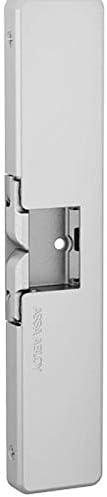


The HES 5000C Complete Pac is a universal electric strike for latchbolt locks, combining a 4.6 rating with substantial strength, endurance, and installation flexibility. Its most immediately useful feature is support for both 12 and 24 volts in DC or AC operation, which makes it easier to align with common access-control power arrangements.
We may earn a commission when you buy through this link, at no additional cost to you.
Documented performance figures distinguish this model from a basic retrofit strike. It has a 1,500-pound static strength rating, 70 foot-pound dynamic strength, and an endurance rating of one million cycles. The strike also allows in-frame horizontal adjustment, uses an internally mounted solenoid, and can be field-selected for fail-secure or fail-safe operation. Both the 501 and 501A faceplates are included, reducing the need to source a separate plate for different latch arrangements.
The tradeoff is that the 5000C is not a no-measurement purchase. It accommodates latchbolts from 1/2 inch to 5/8 inch, with the 5/8-inch latch requiring a 1/8-inch door gap, and the strike body depth is 1-3/16 inches. Installers should confirm the frame cutout, backset, latch projection, and available depth before ordering. Its universal capability also does not make it suitable for rim exit devices requiring a surface-mounted strike.
This is the strongest all-purpose choice in the group for a standard latchbolt door. Choose it when the installer values dual voltage, long-term endurance, field-adjustable alignment, and the option to change failure behavior. For a straightforward cylindrical or mortise door with compatible dimensions, the included faceplates and documented specifications make the 5000C a particularly complete package.
Operating on 12 or 24 volts in either AC or DC gives this model unusual installation latitude. That versatility is particularly useful when the existing access-control controller and power supply have not yet been finalized, provided the final wiring follows the manufacturer’s instructions.
A one-million-cycle endurance specification and 1,500-pound static strength make the 5000C appropriate for demanding commercial doors. These figures are especially relevant in offices, schools, multifamily buildings, and other locations where frequent authorized traffic passes through the same doorway.
We may earn a commission when you buy through this link, at no additional cost to you.
The HES 9600 Series is a high-performance surface-mounted strike intended for rim exit devices. Its 4.6 rating reflects a well-regarded commercial product, while the fire-rated stainless steel construction and three-quarter-inch Pullman latch accommodation distinguish it from ordinary latchbolt strikes.
We may earn a commission when you buy through this link, at no additional cost to you.
The defining advantage is specialization. According to the supplied product information, the 9600 was the first surface-mounted electric strike designed with the strength and durability required to exceed severe ANSI Windstorm testing forces. That makes it a compelling candidate for exit-equipped doors where the strike must integrate with a rim device rather than release a standard latchbolt.
Its scope is also narrow by design. The body accommodates a three-quarter-inch throw Pullman latch, runs on 12 or 24 volts DC under continuous duty, and is intended for metal or wood frame applications. It is not a universal replacement for a cylindrical or mortise door, and the surface-mounted position may require careful attention to hardware projection and clearances.
The HES 9600 is the premium pick for installers seeking a dedicated, fire-rated rim-exit strike with a substantial latch throw and a five-year SecuriCare warranty. It is best suited to commercial egress doors where the exit device and frame measurements have already been confirmed and a surface-mounted solution is appropriate.
Rather than trying to accommodate several unrelated lock families, the 9600 focuses on rim exit devices with a three-quarter-inch Pullman latch. This focused design gives installers a clear fit path when the doorway is already configured for an exit device.
Stainless steel housing, continuous-duty electrical operation, and the stated Windstorm-testing performance indicate a device aimed at demanding commercial traffic. The included five-year warranty also adds meaningful support for professional installations.
We may earn a commission when you buy through this link, at no additional cost to you.
The HES 9400 Series is a slim-line, surface-mounted electric strike for rim exit devices with up to a half-inch throw latchbolt. It earns a 4.5 rating and solves a specific installation problem: fitting electric strike hardware without cutting the door frame.
We may earn a commission when you buy through this link, at no additional cost to you.
All components are enclosed within a stainless steel housing that is only one-half inch thick. This compact construction can make the 9400 attractive where trim, aesthetics, or frame-integrity concerns limit conventional mortised installation. A one-eighth-inch spacer plate is included to accommodate differing door gaps, adding useful adjustment without requiring a custom spacer.
Its limitations are equally important. The product supports rim devices with a one-half-inch throw, which is less than the three-quarter-inch pullman capability of the 9600. Electrical operation is continuous-duty 12 or 24 volts DC. This is therefore not a general-purpose strike for cylindrical or mortise locksets, nor is it intended for a pullman latch exceeding its stated range.
The 9400 is a strong choice for an installer who needs a low-profile surface strike and wants to preserve the frame. It works especially well with compatible rim devices, provided the latch throw and door gap are verified. The slim enclosure, included spacer, stainless construction, and five-year warranty make it a focused solution rather than a general-purpose purchase.
Because the entire mechanism is contained within a one-half-inch-thick surface housing, the 9400 can be installed without cutting the frame. That can simplify upgrades to existing doors where modifying the jamb is undesirable.
The included one-eighth-inch spacer allows an installer to accommodate varying door gaps. It is a small component, but one that can be important when the available space between a rim device and strike must be balanced against the strike’s internal mechanism.
We may earn a commission when you buy through this link, at no additional cost to you.
The HES 5200C Universal is a strong general-purpose strike with a 4.4 rating, 1,500-pound static strength, and 70 foot-pound dynamic strength. It is especially notable for accepting five-eighth-inch to three-quarter-inch latchbolts, a range useful on many commercial doors.
We may earn a commission when you buy through this link, at no additional cost to you.
Installation flexibility comes from a non-handed design and in-frame horizontal adjustment. The unit uses a plug-in connector, which can simplify the physical connection to an access-control system, while dual 12/24 VDC/VAC operation makes it easier to match the available power. Its tamper-resistant construction also suits controlled commercial entrances.
The 5200C has a documented endurance rating of 500,000 cycles, lower than the one-million-cycle figure listed for the 5000C. It also has dimensional constraints: a three-quarter-inch latchbolt requires a one-eighth-inch door gap, and the strike body depth is 1-3/16 inches. Those conditions are manageable but should be confirmed before the door is prepared.
This model is an excellent choice when the project needs a universal, non-handed strike and the latch is larger than the typical one-half-inch size. It fits particularly well with organizations that want dual voltage and broad latch accommodation without moving to a surface-mounted rim strike. Verify measurements, then the 5200C should deliver a capable, adaptable installation.
Supporting five-eighth-inch and three-quarter-inch latchbolts expands the 5200C’s usefulness for commercial locksets. The three-quarter-inch option requires a one-eighth-inch door gap, so the installer should coordinate that dimension before ordering or modifying the frame.
Horizontal adjustment within the frame helps compensate for real-world alignment differences, while the non-handed body reduces left/right version complexity. A plug-in connector adds another practical installation feature for the power and control wiring.
We may earn a commission when you buy through this link, at no additional cost to you.
The 2026 Upgraded ANSI Standard Heavy Duty Electric Strike Lock is a budget-oriented universal option with a 4.6 rating. Its most prominent specifications include a claimed 2,200-pound holding force, a reinforced lock body, a stainless steel faceplate, and compatibility with 12-volt access-control systems.
We may earn a commission when you buy through this link, at no additional cost to you.
This strike supports both fail-safe and fail-secure behavior through a screw adjustment. In fail-safe, normally closed operation, loss of power leaves the door open. In fail-secure, normally open operation, loss of power leaves the door closed. The solid zinc alloy body and corrosion-focused construction are presented as durable alternatives to lightweight metal strikes.
The manufacturer describes installation as requiring no drilling and offers a complete accessory pack with mounting pieces, screws, a diode, and instructions. However, the listed installation guidance specifically asks buyers to confirm frame cutout, latch position, strike-plate size, and cylindrical-lock compatibility before ordering. Those checks are essential, and the no-drilling claim should not replace measurement.
The 5200C-12/24D-630 is our best budget pick for an installer who wants selectable failure modes, a high holding-force claim, and a broad accessory package. It is best for compatible 12-volt cylindrical-lock installations where the frame geometry has already been confirmed. It is less suitable where AC operation, higher voltage, or a rim-exit-specific design is required.
Changing the screw position selects whether the strike releases or remains locked when power is lost. This is a central safety decision for every controlled doorway and should be matched to the building’s egress plan.
The reinforced zinc alloy body, polished stainless steel faceplate, and included mounting hardware provide a practical package without the specialized configuration of a premium commercial strike. Buyers should still verify the fit rather than relying on a universal label alone.
We may earn a commission when you buy through this link, at no additional cost to you.
The HES 9600 Surface Mounted Electric Strike has the highest listed customer rating in this group at 4.8. It is a satin-stainless, surface-mounted model associated with rim-exit applications, making it attractive to buyers seeking a proven, specialized strike rather than a general-purpose latchbolt model.
We may earn a commission when you buy through this link, at no additional cost to you.
Its main appeal is the established HES 9600 platform, which appears elsewhere in the comparison as a fire-rated rim-exit strike with substantial performance characteristics. Here, the supplied information confirms the 630 satin stainless finish and surface-mounted form. Buyers comparing this listing with the more fully specified 9600 Series listing should verify the exact included components, electrical details, warranty, and latch requirements.
The limited data for this particular listing is a genuine purchasing consideration. While the 9600 family is recognized for commercial rim-exit use, this entry’s supplied specifications do not repeat the 12/24-volt configuration, latch throw, frame applications, or warranty found in the other 9600 listing. It should not be assumed that every package detail is identical.
The 9600 Surface Mount is worth considering for a rim-exit doorway where the installer values a surface-mounted commercial design and the model’s strong customer rating. Because the complete specification is not provided here, confirm the current product data, dimensions, voltage, and included hardware before ordering. It is not a substitute for a universal strike on a conventional cylindrical door.
A 4.8 customer rating is the highest listed among the ten products. That feedback is useful context, although ratings should still be considered alongside exact fit, electrical requirements, and the type of door hardware the strike is designed to support.
Surface mounting can simplify installation on existing doors because the strike is attached to the face of the frame rather than recessed into it. The tradeoff is that the hardware remains visible and may project beyond the frame.
We may earn a commission when you buy through this link, at no additional cost to you.
The Seco-Larm SD-995C is a compact strike for metal doors and cylindrical locking systems. Its 4.4 rating and 1,000-pound static strength make it a credible option for access-control conversions where a shallow body and straightforward installation are priorities.
We may earn a commission when you buy through this link, at no additional cost to you.
Two installation characteristics stand out. The shallow design fits most metal doors, and the reversible non-handed construction allows one model to serve right- or left-handed doors. The strike can also be field-selected for fail-safe or fail-secure operation, allowing the final behavior to be determined during installation rather than fixed at purchase.
Unlike some premium models in the comparison, the supplied information does not identify a dual-voltage arrangement, cycle endurance, included faceplates, or warranty term. It also states that the unit can be used with virtually any cylindrical door locking system, but that broad claim should still be checked against latch dimensions, backset, and frame preparation.
The SD-995C is best suited to installers converting a compatible cylindrical lock on a metal door who need a shallow, non-handed, field-adjustable strike. Its stainless steel keeper supports longevity, while the solenoid-based mechanism distinguishes it from buzzer-coil designs. Verify voltage and dimensional details in the current documentation before installation.
The reversible non-handed design removes the need to choose between mirrored left- and right-handed versions. This can simplify procurement for facilities that install the same strike across multiple metal doors.
A shallow strike body can be valuable where the door or frame has limited internal depth. It is particularly relevant to retrofit projects that need to retain the existing metal-door construction and cylindrical lock.
We may earn a commission when you buy through this link, at no additional cost to you.
The AccessTech Innovations Model 300 is a 12-volt access-control strike with a 4.5 rating and a stated 2,200-pound jaw strength. It is designed to convert conventional cylindrical lock sets into electronically controlled access points, giving it a clear role in small commercial and institutional retrofits.
We may earn a commission when you buy through this link, at no additional cost to you.
The package includes the electric strike, two mounting tabs, six screws, a diode, and a user manual. Its dimensions are listed as 4-7/8 by 1-11/16 by 1-1/4 inches, and it accepts latchbolts up to five-eighths inch. The electrical specification is 12 volts DC at 250mA, allowing installers to calculate the power requirement accurately.
Failure behavior is adjustable by screw. The default is fail-secure, meaning the device remains locked when unpowered, while fail-safe leaves it unlocked when unpowered. The non-handed capability covers doors with handles on either side. As with every electrically controlled opening, that choice should follow the facility’s fire and egress requirements rather than convenience alone.
The Model 300 is a practical option for a cylindrical-lock conversion where the latch is five-eighths inch or smaller, the electrical supply is 12 volts DC, and the installer values a stated high-strength design. It is less versatile than the HES universal models for larger latches or AC power, but its included components and documented current draw make planning straightforward.
The Model 300 is intended to turn a conventional cylindrical lock set into an access-controlled door. That makes it useful where electronic credentials or centralized release are needed without replacing the entire lock and door assembly.
A 12-volt DC draw of 250mA gives power designers a concrete figure to work from. Matching the controller’s output and wiring method to these requirements can prevent avoidable installation delays.
We may earn a commission when you buy through this link, at no additional cost to you.
The Seco-Larm SD-998C-D3Q is a surface-mounted electric rim strike with a 4.4 rating, 1,500-pound jaw strength, and 70 foot-pound dynamic strength. It supports up to a three-quarter-inch Pullman latch and is designed for standard rim-type exit devices.
We may earn a commission when you buy through this link, at no additional cost to you.
Tamper resistance comes from concealed mounting screws and a three-quarter-inch-thick metal housing. The reversible non-handed design simplifies handling, while horizontal adjustment helps align the strike with the exit hardware. A non-polarized connection reduces wiring complexity, and the unit operates on 12 or 24 volts DC.
The critical limitation is that this strike is for indoor use only. It should not be selected for an exposed exterior opening unless the current documentation and local conditions specifically permit it. Its three-quarter-inch-thick surface housing also projects from the frame, so installers must check trim clearance and the relationship between the door, exit device, and strike.
The SD-998C-D3Q is a compelling indoor rim-exit option for facilities that need a larger latch throw than the HES 9400 supports. It is especially attractive where concealed fasteners, non-polarized wiring, horizontal adjustment, and field-selectable failure behavior are priorities. Confirm compatibility with the specified Seco-Larm exit devices or another compatible rim-type device before purchase.
Concealed mounting screws reduce casual access to the strike’s fasteners. Combined with the substantial metal housing, this construction addresses security and appearance concerns in indoor controlled doors.
The ability to accommodate a three-quarter-inch Pullman latch makes the device suitable for common rim-exit configurations. Horizontal adjustment and a non-handed design further reduce fitting complications during installation.
We may earn a commission when you buy through this link, at no additional cost to you.
The HES 4500C Electric Strike Complete Pac is a premium, low-profile, heavy-duty, fire-rated strike with a 4.5 rating. Its defining feature is support for cylindrical or mortise locksets with up to a three-quarter-inch throw, making it a versatile option for professional commercial installations.
We may earn a commission when you buy through this link, at no additional cost to you.
The package includes two faceplates so the same strike platform can accommodate either lock family. Dual 12/24 VDC/VAC operation provides broad electrical compatibility, while the satin stainless steel 630 finish suits a wide range of commercial interiors. SecuriCare includes a five-year no-fault, no-questions-asked warranty, and the product is described as tested and certified.
Fit still requires care. The manufacturer notes that relocation of the strike preparation may be required for Schlage L Series and Yale 8700 mortise locks, and advises consulting support regarding compatibility with Best 40 series locks. These are brand-specific preparation issues that can affect the apparent universality of the package.
The 4500C is the premium choice for a fire-rated doorway where either a cylindrical or mortise lock may be present, a low-profile body is needed, and a five-year warranty is important. It is particularly attractive to professional installers handling varied commercial inventories, provided they verify the exact lock family, latch throw, and strike-preparation dimensions before ordering.
The low-profile, heavy-duty, fire-rated design gives this strike a clear role in commercial doors where code-conscious construction and reliable operation matter. Its stated certification and warranty provide additional confidence for professionally managed installations.
The included faceplates allow the 4500C package to work with cylindrical and mortise locksets, reducing the need to stock separate complete strikes for both formats. Brand-specific preparation differences still need to be checked before installation.
We may earn a commission when you buy through this link, at no additional cost to you.
The correct electric strike depends less on appearance than on exact fit, electrical behavior, and the type of door hardware it must coordinate. Use the following factors to narrow the field before comparing faceplates, voltage, and failure modes.
Begin by identifying whether the door uses a cylindrical lock, mortise lock, standard latchbolt, or rim exit device. A universal strike may cover several lock formats, but that label does not guarantee compatibility with every brand, backset, latch projection, or door thickness. Compare the strike’s documented latch range with the physical latch on the door, including its width and throw. For example, the HES 5000C supports one-half-inch to five-eighth-inch latchbolts, while the 5200C reaches three-quarter-inch latches under the stated gap condition. Rim strikes require a separate compatibility check because they engage a pullman latch rather than a conventional latchbolt.
Decide whether the frame can accept an embedded strike or requires a surface-mounted body. Embedded universal strikes fit within a prepared jamb and often suit new construction or planned retrofits. Surface-mounted rim strikes avoid frame cutting but project beyond the face of the frame, which can affect trim, aesthetics, and clearance. The HES 9400 is especially focused on avoiding frame cutting, while the 9600, SD-998C-D3Q, and other rim strikes are designed for face-mounted applications. Check the available frame depth, exposed trim dimensions, and the spacing between the exit device and door edge before ordering.
Electric strikes must be matched to the voltage and electrical character of the control system. Several HES models accept 12 or 24 volts in DC or AC, while the 9600, 9400, and SD-998C-D3Q are listed for 12/24-volt DC operation. The AccessTech Model 300 draws 250mA at 12 volts DC, and the budget ANSI strike is specified for 12-volt access-control systems. A non-polarized connection can simplify polarity, but it does not make the voltage requirement flexible. Check the controller output, power-supply capacity, wire type, and manufacturer wiring diagram as a single system.
Fail-safe and fail-secure determine what happens when power is removed. A fail-safe strike releases the door, which supports egress during a power interruption but may also reduce security. A fail-secure strike remains locked, preserving controlled access but potentially complicating egress unless paired with appropriate hardware. Several products are field-selectable, allowing the installer to configure behavior on site. The Seco-Larm SD-995C, 2026 Upgraded ANSI strike, and AccessTech Model 300 all support both modes, while the HES 5000C is also described as field selectable. Base the decision on the building’s fire, life-safety, security, and access-control requirements.
Static strength describes resistance to a sustained pulling force, while dynamic strength reflects force applied during opening. Cycle endurance indicates expected operational longevity. Among the HES options, the 5000C lists a 1,500-pound static strength, 70 foot-pound dynamic strength, and one-million-cycle endurance. The 5200C also has 1,500-pound static strength but a documented 500,000-cycle endurance. The AccessTech Model 300 states 2,200-pound jaw strength and 500,000 cycles. Compare these figures rather than relying on a generic heavy-duty label, while also considering door construction, traffic volume, and whether the latch is correctly aligned.
An electric strike must fit the actual space between the door and frame while still capturing the latch correctly. Several models include horizontal adjustment, and the HES 9400 includes a one-eighth-inch spacer for varying door gaps. Other products specify the gap needed for larger latches, such as the 5000C’s one-eighth-inch gap with a five-eighth-inch latch and the 5200C’s requirement for a three-quarter-inch latch. Measure the closed-door gap at the strike location, including any irregularity caused by the door’s swing or frame alignment.
The strike should visually suit the surrounding lock, door hardware, and frame finish. Satin stainless steel, designated as finish 630, appears on several HES products and is a common commercial choice. The Seco-Larm rim strike uses stainless steel construction, while the budget ANSI option combines a solid zinc alloy body with a polished stainless steel faceplate. Material choice is not merely cosmetic: corrosion resistance, housing thickness, concealed fasteners, and tamper-resistant construction can matter in high-traffic or controlled areas. Consider the operating environment and the level of physical exposure.
Manufacturer support can be particularly valuable when a specific lock brand, fire-rated application, or unusual frame preparation is involved. The HES 9600, 9400, and 4500C listings include a five-year SecuriCare no-fault, no-questions-asked warranty. The 4500C specifically directs buyers to consult support for certain Best 40 series lock considerations and possible strike-prep relocation. Warranty coverage does not replace dimensional verification, so use support before modifying the frame whenever compatibility is uncertain.
Begin by opening and closing the door normally, then testing the strike without power according to the manufacturer’s instructions. Confirm that the latch enters and exits the strike smoothly, that the door closes consistently, and that the alignment adjustment operates as expected. The latch should not scrape, bind, or require forceful pulling. For rim devices, verify that the pullman latch engages the intended portion of the strike rather than contacting the housing at the wrong angle.
Configure the required failure mode before connecting the strike to the access-control system. Where the design allows a screw adjustment, make the selection with the unit disconnected and follow the supplied instructions. Wire the device using the correct controller output, observe polarity where required, and use a compatible diode or power-management arrangement as directed. The AccessTech Model 300 is rated for 12 volts DC at 250mA, while the relevant HES models support their listed 12/24-volt arrangements.
For routine care, keep the strike body, keeper, and moving latch free of grit, paint buildup, and debris. Inspect the fasteners and frame alignment periodically, particularly on high-traffic doors. Do not force a misaligned latch or repeatedly cycle a strike that is binding; instead, correct the gap or alignment and confirm that the door’s closing action remains normal. Outdoor exposure should also be checked against the product’s stated environmental limitations, including the indoor-only designation of the Seco-Larm SD-998C-D3Q.
A universal electric strike is designed to work with several common latchbolt lock formats, often cylindrical or mortise locks. A rim electric strike is designed specifically to release the pullman latch of a rim exit device and is normally mounted on the face of the frame. The two types are not interchangeable merely because both are called electric strikes. Confirm the existing door hardware, latch type, frame construction, and mounting space before selecting either style.
It depends on the access-control system. The strike may be powered by a dedicated power supply, a controller output, or another compatible low-voltage source, depending on its current draw and wiring requirements. A 12-volt strike must not be connected indiscriminately to a 24-volt source, and total demand can exceed what a controller is designed to supply. Review the strike instructions and controller documentation, then plan conductor routing and power capacity as part of the installation.
A fail-safe strike releases the door when power is removed, allowing the door to open without electrical power. A fail-secure strike remains locked during a power loss. Neither mode should be selected only by convenience: egress, fire safety, and security requirements must be reviewed. Products with a field-selectable mode give the installer flexibility, but the final setting should reflect the building’s approved access-control plan.
Measure the frame cutout width and height, the body depth, the backset from the door edge, and the latch width and throw. Also record the door-to-frame gap when closed and note whether the existing strike is embedded or surface mounted. These measurements are more useful than a brand name because compatible-looking strikes can have different body dimensions, faceplate patterns, and latch ranges. Compare every measurement with the manufacturer’s dimensional drawing before ordering.
Many of the listed products are non-handed or reversible, including the HES 5200C and Seco-Larm SD-995C. That means the strike body can be oriented for either hand without changing its core function. Handing is not the only consideration, however; the latch must still match the selected faceplate, and rim strikes must align correctly with the exit device. Verify the complete hardware configuration rather than relying on handing alone.
Static strength is the strike’s rated resistance to sustained force applied to the door. Dynamic strength is its ability to withstand force while the door is moving. Both are relevant in high-traffic or security-sensitive locations, but neither replaces correct latch alignment. A properly fitted strike should not be subjected to unnecessary pulling or impact simply because the product has a high strength figure.
Only a device that is specifically listed and certified for the intended fire-rated door and assembly should be used. The HES 4500C is described as a fire-rated solution, while the HES 9600 listing is also identified as fire rated. Installation instructions, listed components, and the door assembly requirements all matter. A general strike should not be substituted into a rated opening merely because its dimensions appear compatible.
Common causes include an incorrectly selected fail mode, insufficient controller output, loose wiring, a reversed polarity requirement, a disconnected diode, or a latch that is not properly aligned. A jammed or obstructed keeper can also prevent release. Check the power source and connections, verify the selected mode, and inspect the latch and frame gap before replacing the hardware. Follow the manufacturer’s diagnostic procedure and disconnect power before handling exposed electrical components.
The HES 5000C Complete Pac stands out as the most balanced general-purpose option, combining dual AC/DC voltage, a one-million-cycle endurance rating, horizontal adjustment, and two included faceplates. The HES 5200C is also highly capable for larger latchbolts and offers a non-handed design, while the HES 4500C provides the premium fire-rated package for professional cylindrical and mortise installations.
Prioritize the hardware that is explicitly compatible with the door rather than the broadest marketing description. Verify latch throw, frame cutout, body depth, door gap, voltage, and mounting style. Then select fail-safe or fail-secure behavior according to the building’s safety and security requirements. Rim-exit doors require a purpose-built rim strike, while conventional latchbolt doors benefit from a universal model.
Finally, review the current listing, manufacturer instructions, included components, environmental limitations, and warranty terms before purchasing. Product configurations and availability can change, and even a well-rated strike can fail when installed against the wrong frame or electrical system. Careful measurement and verification are the most reliable route to a successful installation.


