Uniden Bearcat BC125AT
4.0Editor score
500 tagged memory channels
Analog reception only
Compact orange-backlit design
Handheld police scanners compared for digital reception, memory, programming, portability, alerts, features, and overall value.
A useful handheld police scanner should make local radio traffic easy to find while remaining portable, configurable, and suitable for the systems used in your area. Digital capability, database quality, signal handling, and battery support matter more than headline channel counts, especially where public safety agencies use modern trunked systems.
This guide compares ten products based on the supplied specifications, including radio formats, memory capacity, programming options, location features, alerts, construction, and everyday portability. It also identifies two amateur radios that are not dedicated police scanners, helping readers distinguish monitoring-only devices from two-way transceivers before buying.
Each review explains who the product best suits, where it falls short, and which technical details deserve attention. Ratings and specifications reflect the available product data, while prices and availability can change. Readers should also confirm local radio formats and applicable monitoring laws before making a purchase.
4.0Editor score

4.4Editor score

4.2Editor score
The comparison below highlights each product's radio support, programming approach, portability, and key listening features. It also makes clear that the final two products are amateur-radio transceivers rather than dedicated public-safety scanners.


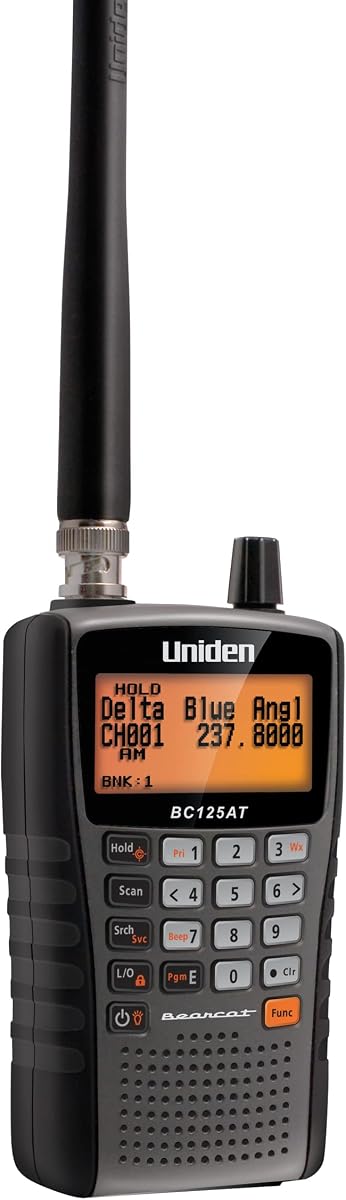
The Uniden Bearcat BC125AT is a compact analog scanner with a 4.0 rating and a feature set aimed at straightforward listening. It stores 500 alpha-tagged channels across 10 storage banks, making it easy to sort police, fire, marine, aviation, and other services without repeatedly searching a long frequency list.
We may earn a commission when you buy through this link, at no additional cost to you.
Its strongest qualities are approachable organization and immediate usability. Ten preset search bands help new users find conventional transmissions, while Close Call RF capture quickly tunes to nearby signals. The orange backlight makes the display easier to read in low-light conditions, and the lightweight housing suits travel and outings.
The central limitation is that this model receives analog systems only. It cannot decode Project 25, DMR, NXDN, or digital trunking used by many public-safety agencies. Its 500-channel memory is also smaller than that of several digital alternatives, and the device is strictly a receiver rather than a two-way radio.
The BC125AT is a sensible choice for beginners, travelers, and listeners in areas whose emergency traffic remains analog. Buying it for a city dominated by digital trunked systems would create an immediate limitation, so prospective owners should verify the formats used locally before choosing this model.
Alpha tags and ten storage banks make the BC125AT easier to manage than a basic fixed-frequency receiver. Users can create logical groups for different agencies, locations, or interests, while the preset bands provide a useful starting point for discovery.
Analog-only reception makes this an affordable specialist rather than a universal public-safety scanner. Check whether nearby police, fire, and emergency agencies still use conventional analog systems before treating it as a complete monitoring solution.
We may earn a commission when you buy through this link, at no additional cost to you.
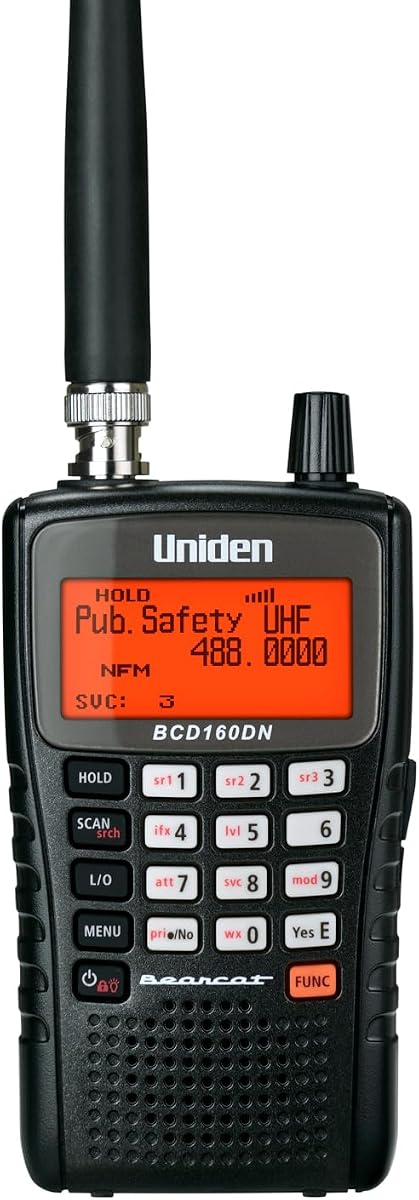
The Uniden Bearcat BCD160DN is a compact digital scanner that supports DMR and NXDN while providing 1,000 channels of memory. Its 3.2 rating is the lowest among the dedicated scanners listed, but the underlying feature set distinguishes it from conventional analog-only models.
We may earn a commission when you buy through this link, at no additional cost to you.
DMR and NXDN support is preloaded, allowing users to begin with compatible local systems. Rapid DCS and CTCSS decoding helps identify signaling quickly, while the band scope, narrow-band reception, system and channel tagging, and custom search functions assist with finding elusive signals.
The important limitation is explicitly stated in the product data: trunking and APCO P25 are not supported. That means it cannot cover every major digital format used by public safety organizations. Although PC programming adds control, the scanner's 1,000-channel capacity is also lower than the 25,000 offered by the BCD325P2.
This model is best for someone who specifically needs a small DMR or NXDN receiver and does not need Project 25 or trunked systems. It may also appeal to travelers who want rechargeable AA power and programmable profiles. Buyers should check local system formats rather than choosing it solely for its digital label.
The BCD160DN gives users direct access to DMR and NXDN rather than presenting a broad but incomplete digital feature list. This focused approach can be useful where those formats dominate and P25 is not required.
PC software allows management of profiles, favorites, databases, and firmware updates. Two rechargeable AA batteries are included, and the supplied USB cable charges them while the scanner is turned off.
We may earn a commission when you buy through this link, at no additional cost to you.
The Uniden SDS100 is a True I/Q digital handheld scanner with a 4.4 rating, the highest among the dedicated scanners in this list. It is designed for users who need reliable digital performance in weak-signal or simulcast areas rather than simply wanting a broad selection of reception modes.
We may earn a commission when you buy through this link, at no additional cost to you.
Its True I/Q receiver captures the complete signal waveform in three dimensions, supporting better digital error correction and signal recovery. The color display is customizable by field, the HomePatrol database covers known US and Canadian radio systems, and Sentinel software allows regular database updates.
Programming can be as simple as entering a zip or postal code. The scanner also supports GPS coordinates and an optional external GPS receiver for automatic system selection during travel. These capabilities come with a relatively substantial purchase cost, and the weather-resistant JIS4 housing is beneficial for field use but should not be treated as waterproof.
The SDS100 is the most balanced recommendation for listeners who prioritize digital performance, location-based convenience, and a polished display. It is particularly attractive in challenging RF environments. Those who merely need conventional analog channels may find more simplicity and value in the BC125AT.
The True I/Q architecture is the SDS100's defining advantage. By capturing a complete three-dimensional waveform, it is designed to improve error correction and recovery where signals are weak or simulcast transmissions overlap.
The updatable HomePatrol database reduces the need to enter every local system manually. Zip-code setup is approachable, while optional GPS support provides automatic reselection when the user changes location.
We may earn a commission when you buy through this link, at no additional cost to you.
The Uniden BCD325P2 combines 25,000 dynamically allocated channels with TrunkTracker V, making it a strong choice for listeners who cover many systems or travel across different regions. Its 4.1 rating reflects a capable feature set centered on trunked monitoring and flexible storage.
We may earn a commission when you buy through this link, at no additional cost to you.
Advanced Dynamic Memory assigns space more efficiently as needs change, while 100 Quick-Key positions give fast access to frequently used systems. Support for APCO Project 25 Phase II is valuable in modern public-safety environments, and the DCS and CTCSS rapid decode feature helps identify system settings.
Close Call RF capture automatically tunes to nearby signals, which can be useful when traveling or exploring an unfamiliar area. Optional GPS connectivity allows the scanner to select systems based on the user's position, and S.A.M.E. weather alerts target warnings for a specific area.
The BCD325P2 is a better match for advanced listeners who need trunking, P25 Phase II, and a large memory pool. Users focused on simple analog listening can find that capacity unnecessary, while travel-oriented buyers should budget separately for the optional GPS receiver.
The 25,000-channel limit and dynamic allocation system provide room for extensive regional coverage. This is especially useful for listeners moving between cities or maintaining several large groups of agencies.
The 100-key Quick-Key system reduces navigation time by putting important systems near the front of the interface. It is a practical feature for anyone who does not want to search through every programmed channel after each change.
We may earn a commission when you buy through this link, at no additional cost to you.
The Uniden Bearcat SR30C is a compact 500-channel analog scanner with a 4.0 rating. Positioned as an entry-level portable model, it combines conventional scanning, priority monitoring, Close Call capture, and PC programming in a simple package.
We may earn a commission when you buy through this link, at no additional cost to you.
Ten preset service banks cover non-digital police, fire, emergency traffic, NOAA weather, marine, racing, civil aircraft, amateur radio, railroad, and other bands. The triple-conversion design is intended to improve reception, while the priority function places designated channels ahead of others during a scan.
Memory backup helps preserve programmed frequencies when power is lost. It can run from two AA alkaline batteries, two AA rechargeable Ni-MH batteries, or USB power, and rechargeable cells can be charged through the included cable. The major constraint is analog-only operation, which excludes P25, DMR, NXDN, and digital trunking.
The SR30C suits beginners who want a portable scanner for conventional local traffic, aviation, weather, racing, or railroad monitoring. It is less appropriate for anyone whose local emergency agencies have moved to digital systems. Its preset bands and memory backup make it particularly friendly to new users.
The preset service banks make useful frequencies available without requiring extensive initial programming. This lowers the barrier to entry and gives users a quick way to explore several parts of the radio spectrum.
USB power and two-AA battery options let the scanner operate in a vehicle, at home, or outdoors. Memory backup also reduces the frustration of rebuilding a list after an unexpected power interruption.
We may earn a commission when you buy through this link, at no additional cost to you.
The Uniden BCD436HP is a digital handheld scanner designed to make large radio databases accessible without traditional manual programming. Its 4.2 rating reflects a strong balance of ease of use, monitoring features, and alert controls for public-safety and other communications.
We may earn a commission when you buy through this link, at no additional cost to you.
Entering a zip code lets TrunkTracker V identify nearby systems from a database based on Radio Reference information. The scanner covers systems across the USA and Canada and can receive public safety, fire, EMS, aircraft, military, and weather traffic. Its scan rate is listed at 85 channels per second.
The extra-large display makes system information easier to inspect, while instant replay can play back up to 240 seconds of recent transmissions. Custom alerts can respond to channel or unit IDs, Close Call hits, emergency indicators, and tone-outs, with multiple patterns, volume levels, colors, and flash choices.
The BCD436HP is ideal for users who want extensive digital discovery with minimal programming. It is particularly convenient for travelers who can set a location quickly. Buyers who need advanced signal-processing performance in especially difficult environments may also consider the True I/Q SDS100.
The zip-code workflow is the model's most important convenience feature. Instead of manually discovering local frequencies and control channels, users can begin with systems selected from the USA and Canada database.
Custom alerts can highlight particular identifiers and emergency events, while instant replay helps users catch a transmission that began moments earlier. Together, these features improve the chance of noticing important activity during active scanning.
We may earn a commission when you buy through this link, at no additional cost to you.
The Uniden SDS150 is a premium field-oriented scanner with a 4.2 rating and an ambitious combination of radio technology, portability, and location features. It is the first listed scanner to incorporate software-defined radio technology, alongside a True I/Q receiver designed for weak-signal and simulcast environments.
We may earn a commission when you buy through this link, at no additional cost to you.
Its built-in GPS receiver removes the need for a separate GPS unit, making location-based operation more portable. A simplified control layout and digital display aim to make the advanced platform more approachable, while optimized power management is intended to support extended field use.
The supplied information describes the housing as water-resistant to JIS4 and IPX4 standards and rugged enough for daily professional use. It also supports the U/Aware smartphone app and includes a charge cradle with a slot for an extra battery, although that additional battery is sold separately.
The SDS150 is suited to serious listeners who want the most advanced platform, built-in positioning, and field-ready construction. Its purchase cost makes it difficult to recommend to a first-time buyer, but it may be worthwhile for users who regularly travel, work outdoors, or monitor difficult digital systems.
The software-defined radio architecture is the SDS150's primary technical distinction. Combined with True I/Q, it targets cleaner reception and more reliable digital recovery where weak signals and simulcast overlap create difficulty.
Built-in GPS, app connectivity, optimized battery management, and a dedicated cradle reduce the number of accessories needed while traveling. The water-resistant housing adds confidence for outdoor use without implying full submersion protection.
We may earn a commission when you buy through this link, at no additional cost to you.
The Whistler WS1040 is a programmable digital handheld scanner with a 4.1 rating. It supports P25 Phase I, trunking, multiple systems, PC programming, and S.A.M.E. weather alerts, making it a practical alternative for listeners who do not need to commit to one manufacturer's ecosystem.
We may earn a commission when you buy through this link, at no additional cost to you.
Its menu-driven programming approach includes context-sensitive help for each item. Scan lists can be arranged according to personal preferences, while Free Form Memory allocates capacity dynamically instead of forcing users into rigid banks that may sit unused.
The Skywarn Storm Spotter function provides immediate access to storm-spotter frequencies, and digital AGC is designed to compensate for low audio levels found on digital systems. LED and audio alerts help users notice important activity without watching the display continuously.
The WS1040 is best for users who specifically need P25 Phase I and comfortable PC-based customization. It is less suitable when P25 Phase II is required, since that capability is not listed for this model. A compatible computer and programming cable are also central to the configuration process.
Free Form Memory allocates space as it is needed, which is more flexible than fixed memory banks. This allows large or changing system lists to share available capacity without the waste found in older scanner designs.
Context-sensitive help explains menu options while the user is configuring the scanner. This makes the PC interface more approachable, although the Whistler remains a programmable model rather than a simple zip-code appliance.
We may earn a commission when you buy through this link, at no additional cost to you.
The BAOFENG BF-F8HP PRO is a programmable amateur-radio transceiver with a 4.3 rating, not a dedicated public-safety scanner. It offers 1,000 memories, ten named zones, tri-band transmission, receive-only airband and NOAA functions, and USB-C charging.
We may earn a commission when you buy through this link, at no additional cost to you.
Its scanning covers conventional analog channels only. Users can organize frequencies into named zones, temporarily skip a busy channel, and use Dual Watch to alternate one receiver between two displayed frequencies. A Single Watch mode provides a full-screen view of one channel's name, zone, and frequency.
Computer programming requires BTECH CPS or supported CHIRP-next software with a separately sold PC03 cable, and firmware updates use the same model-specific process. The radio can transmit on amateur frequencies with the required authorization, while airband AM, NOAA weather, and broadcast FM remain receive-only.
This product is a good fit for licensed amateur operators or conventional-frequency listeners who want transmit capability in one radio. It should not be chosen as a police scanner because it cannot decode DMR, digital systems, or trunked control systems and is not designed for public-safety database monitoring.
The 1,000-memory capacity and ten-zone organization suit amateur operators managing repeaters, simplex channels, travel profiles, and event frequencies. Clear English menus make routine changes possible directly from the keypad.
The BF-F8HP PRO scans conventional analog frequencies and does not decode digital or trunked systems. It also transmits, creating different legal and operational considerations from a receive-only police scanner.
We may earn a commission when you buy through this link, at no additional cost to you.
The BAOFENG K5PLUS is a 4.5-rated amateur-radio transceiver rather than a handheld police scanner. It supports tri-band transmission on UHF, VHF, and 1.25M, while reception expands across VHF, UHF, FM, airband, 1.25M, 1M, and NOAA bands.
We may earn a commission when you buy through this link, at no additional cost to you.
Adjustable output levels of 10 watts, 7 watts, and 4 watts let the user balance communication range against battery use. One-Key Frequency Copy can copy frequencies and CTCSS or DCS codes from other radios, reducing setup errors when coordinating channels with compatible equipment.
The radio includes a 2,500mAh rechargeable battery, USB-C charging cable, long high-gain antenna, and speaker microphone. CHIRP programming supports configuration of frequencies, names, tones, and power levels, with batch editing and broad model compatibility for users who manage larger channel lists.
The K5PLUS is best for licensed amateur-radio operators who want two-way tri-band communication and a high-output radio. It is not appropriate as a police scanner because it lacks trunked and digital decoding, and transmission on amateur frequencies in the United States requires valid authorization.
The three output levels give operators a practical balance between range, clarity, and battery consumption. Higher settings can help in challenging terrain or on longer paths, while lower settings are useful for ordinary local communication.
The K5PLUS is useful for two-way amateur communication, but that is a different use from monitoring public-safety traffic. Its CHIRP programming and receive bands may interest conventional listeners, yet the absence of trunking and digital decoding rules it out as a modern police-scanner solution.
We may earn a commission when you buy through this link, at no additional cost to you.
The right handheld police scanner depends less on the largest advertised memory count and more on radio-system compatibility, receiver performance, programming convenience, portability, and alerts. These factors determine whether a device can actually monitor the agencies and signals you want.
Begin by identifying the radio formats used by local police, fire, EMS, and dispatch agencies. Modern public-safety communications may use Project 25, DMR, NXDN, or digital trunking, and a scanner that lacks the correct decoder can remain silent even when it has a long list of nearby frequencies. Products such as the SDS100 and BCD436HP are digital-oriented, while the BC125AT and SR30C are analog-only. The BCD160DN supports DMR and NXDN but explicitly does not support trunking or APCO P25. The Whistler WS1040 supports P25 Phase I, while the BCD325P2 adds Project 25 Phase II support. A large memory count cannot compensate for an incompatible radio format.
Choose a scanner that supports every format used by the agencies you expect to monitor, including formats used in areas you may visit. Confirm that the product is a scanner rather than a transceiver when monitoring-only use is required.
Signal quality depends on more than nominal sensitivity. Weak signals, distant transmitters, and overlapping simulcast systems can distort audio or make digital packets unrecoverable. The SDS100 and SDS150 use True I/Q receivers intended to capture the complete waveform and improve digital error correction and signal recovery. The SR30C uses a triple-conversion design for conventional reception, while the BCD160DN emphasizes narrow-band reception and rapid signaling detection. Receiver design matters most when monitoring large cities, rural areas with distant towers, or regions where neighboring systems share frequencies.
Prioritize a receiver built for the signal conditions you encounter rather than focusing only on channel count. True I/Q is a meaningful advantage in difficult digital environments, but a well-matched analog receiver remains sufficient where emergency traffic is conventional.
Programming method determines how quickly a new scanner becomes useful. The BCD436HP and SDS100 support location-based setup through a zip or postal code and an updatable HomePatrol database, reducing the need to enter local systems manually. The BCD325P2 and BCD160DN support PC software for detailed management of profiles, favorites, databases, and firmware. The BC125AT and SR30C provide a simpler conventional approach, while the Whistler uses menu-driven PC programming with context-sensitive help. Ham-radio models may use BTECH CPS or CHIRP, but that software is intended for conventional amateur channels rather than public-safety trunking.
Choose automatic database setup for quick local discovery or PC programming for control over extensive custom lists. Confirm the required cable, software, and computer compatibility before ordering a programmable model.
Memory determines how many frequencies, systems, and tags a scanner can store, but organization is at least as important as the raw number. The BC125AT and SR30C provide 500 channels, while the BCD160DN offers 1,000 and the BF-F8HP PRO provides 1,000 conventional memories. The BCD325P2 supports 25,000 dynamically allocated channels, and the BCD436HP and SDS100 use larger database-oriented systems. Alpha tags, named groups, scan lists, favorites, and Quick-Key access help users find important content quickly. Consider how many regional systems you need and whether automatic location selection or manually arranged groups better fits your routine.
Match capacity to actual coverage needs and prioritize clear organization. A well-organized 500-channel scanner can be easier to use than a large database with confusing navigation, while travelers often benefit from dynamic memory.
Location-based scanning helps the receiver select relevant systems automatically. The SDS100 supports zip-code, postal-code, and GPS-coordinate location selection, while the SDS150 includes a built-in GPS receiver. The BCD436HP and BCD325P2 support GPS connectivity, although an external GPS receiver may need to be purchased separately. This is especially valuable for road trips, where staying on a manually selected city can waste time scanning distant systems. Consider whether built-in GPS justifies the added cost or whether optional positioning is sufficient for occasional travel.
Built-in GPS provides the simplest travel experience. Optional GPS is adequate for users who only need precise system selection occasionally, but they should include the accessory and setup effort in their planning.
Useful alerts can make a scanner easier to monitor without keeping constant attention on its display. The BCD436HP offers programmable alerts based on channel or unit IDs, emergency indicators, Close Call hits, and tone-outs, plus up to 240 seconds of instant replay. The BCD325P2 supports S.A.M.E. weather alerts, and the Whistler WS1040 includes S.A.M.E. alerts, LED indicators, and audio alerts. Close Call RF capture appears across several Uniden models and can quickly tune to nearby transmitters. These features help users discover activity, but they work best after the core systems and priorities have been programmed.
Prioritize alerts tied to situations you cannot afford to miss, such as severe weather or emergency identifiers. Replay and discovery features are helpful additions, but they should not replace accurate local programming.
A handheld scanner should be comfortable to carry and dependable during travel. The BC125AT emphasizes a lightweight design and orange backlit display, while the SDS100 has rugged JIS4 weather-resistant construction. The SDS150 combines a lightweight housing with JIS4 and IPX4 water resistance, a charge cradle, and optimized battery management. The BCD160DN accepts rechargeable or alkaline AA batteries, and the SR30C can operate from USB or two AA batteries. Ham radios also require attention to battery capacity, charging method, included antenna, and transmit accessories. Water resistance should not be confused with full waterproofing, and higher radio output does not necessarily improve reception.
Match power and construction to the environment. For casual indoor listening, simple AA power may be adequate; for daily outdoor or professional use, a rugged housing, integrated charging, and stronger battery support can be more valuable.
A scanner is a receiver, but monitoring laws can vary by jurisdiction and context. The BC125AT, BCD160DN, and SR30C are receive-only devices. The BAOFENG BF-F8HP PRO and K5PLUS can transmit, and the BF-F8HP PRO states that valid amateur authorization is required for U.S. amateur transmissions. Never use a radio to interfere with emergency communications, and follow local rules concerning privacy, publication of intercepted transmissions, and radio operation. Product capabilities do not grant permission to monitor or transmit.
Review applicable laws before use and be especially careful when publishing identifying information heard over the air. Users who only need to listen should choose a scanner, while licensed operators should follow their amateur-radio privileges and equipment rules.
Start by charging or installing the correct batteries, then consult the manufacturer's instructions for the exact controls and battery type. For a database-based model, enter your zip or postal code, wait for system selection, and confirm that relevant local agencies appear. With a programmable scanner, install the appropriate software, connect the scanner, and begin with a small list of conventional or digital systems before adding large regional collections.
Organize channels into meaningful groups and use names, tags, favorites, priorities, or Quick-Keys to make the most important traffic easy to find. Set the appropriate location when traveling, configure weather and emergency alerts, and adjust volume, squelch, display, and alert settings for the environment. Do not alter power levels or transmit with a scanner unless the device explicitly supports transmission and the operator is legally authorized.
Keep the scanner dry, protect the connector and controls from impact, and use the supplied charging method for rechargeable batteries. Clean the exterior with a lightly damp cloth, avoid opening the housing unless authorized, and update the scanner's database and firmware when compatible updates are available. Periodically verify that local systems still appear and that your stored groups remain accurate.
No. A scanner must support the exact formats used by each agency, which may include conventional analog, Project 25, DMR, NXDN, or digital trunking. Even a capable digital model can remain silent on unsupported systems. Check the formats used by local dispatch agencies before buying, especially in larger cities where digital trunking is common.
Owning a receive-only scanner is generally permitted in many places, but monitoring and publishing rules vary by jurisdiction. Some locations restrict the types of communications that may be intercepted, and privacy rules may apply. Users should check local laws and avoid interfering with emergency traffic, rebroadcasting sensitive material, or publishing identifying details without permission.
An analog scanner receives conventional FM transmissions, while a digital scanner decodes digitally encoded voice and control data. Digital systems may use Project 25, DMR, or NXDN, and they can also be trunked, meaning a scanner must follow changing control frequencies. The BC125AT and SR30C are analog-only, while several other models in this guide support selected digital formats.
GPS is most useful for travelers because it can automatically select nearby radio systems as the user changes location. The SDS150 includes GPS, while the SDS100, BCD436HP, and BCD325P2 support location features with varying GPS requirements. For listeners who remain in one area, zip-code or manual programming may be sufficient.
No. Both are amateur-radio transceivers capable of two-way transmission, and their scanning is limited to conventional analog channels. They cannot decode modern digital or trunked public-safety systems like the dedicated Uniden and Whistler scanners. They are appropriate for licensed amateur-radio users, not listeners who need a police scanner's reception formats and database tools.
Channel count describes storage capacity, not receiver quality. Reception depends on the radio design, filters, signal processing, antenna performance, and interference environment. The SDS100 and SDS150 use True I/Q technology for difficult digital conditions, while a simpler analog model may perform adequately where nearby traffic is conventional and close by.
Database-based and programmable scanners benefit from regular database and firmware updates because systems can change over time. The SDS100's HomePatrol database is described as receiving weekly updates, while the BCD160DN supports firmware updates through Uniden software. Updating helps keep stored regional information current, though users should follow model-specific instructions.
Start with a scanner that has appropriate digital decoding and strong receiver performance, then position the unit where it has a clear view of the relevant area. Proper antenna connection, updated programming, and a suitable external antenna may help, but users should follow the manufacturer's guidance. Avoid assuming that more transmission power will improve a receive-only scanner's reception.
The Uniden SDS100 stands out as the best overall dedicated scanner in this group because its True I/Q receiver, color display, location-based setup, and updatable database combine strong performance with approachable operation. The Uniden SDS150 offers the most premium, field-oriented design, while the Uniden Bearcat BC125AT is the practical budget choice for analog-only listening.
Prioritize radio-format compatibility first, then consider receiver architecture, programming method, location tools, alerts, and physical design. The BCD325P2 fits advanced trunked and P25 Phase II users, the BCD436HP serves database-driven beginners, and the Whistler WS1040 provides programmable P25 Phase I reception. The two BAOFENG products are better understood as amateur-radio transceivers.
Ratings, product configurations, and availability can change, and current prices should be checked before purchasing. Most importantly, confirm which formats your local agencies use, what accessories or software are required, and what monitoring rules apply. A well-matched scanner will provide a far more useful experience than one selected solely on channel count or headline features.