
Garmin Forerunner 165
4.6Editor score
Built-in GPS tracking
Up to 19-hour GPS runtime
More than 25 activity profiles
Personalized workout suggestions
A triathlon watch must track more than a single sport. It needs dependable GPS, useful running and cycling metrics, reliable swim handling, recovery guidance, and enough battery for long training days. The right model also needs to be comfortable, readable, and simple to operate while fatigued or moving quickly.
We compared the ten models using their supplied specifications, focusing on multisport profiles, navigation, battery life, training features, health insights, display design, and practical extras. The list covers performance-focused Garmin watches, health-oriented models, rugged adventure options, and more affordable trackers for athletes building their first multisport setup.
Each review explains where a watch stands out, where it makes compromises, and which type of triathlete it may suit best. The top three receive special award labels, while every model is included in the comparison table. Product ratings, features, and availability can change, so confirm current details before buying.
4.6Editor score

4.1Editor score

4.1Editor score
As an Amazon Associate we earn from qualifying purchases.
This side-by-side comparison highlights each watch's strongest attributes, from navigation and multisport tracking to battery life, training guidance, and everyday utility.




The Garmin Forerunner 970 is the most balanced triathlon-focused option in this guide, earning a 4.1 rating from the supplied data. Its headline strengths are full-color built-in maps, multi-band GPS with SatIQ, a responsive AMOLED display, and training tools that connect daily effort with readiness, recovery, and suggested workouts. Together, these features make it especially useful for athletes who alternate between running, cycling, and swimming rather than training for only one sport.
We may earn a commission when you buy through this link, at no additional cost to you.
Navigation is one of the clearest reasons to consider this model. Full-color maps, turn-by-turn directions, multi-band positioning, and SatIQ support can help an athlete find unfamiliar routes while maintaining better confidence in urban canyons, wooded trails, or mountainous areas. The Forerunner 970 also provides race-oriented tools such as course details, daily suggested workouts, and training readiness, allowing the watch to act as a planning partner instead of merely recording completed activities.
The main complication is inconsistency in the supplied listing information. The product is named Forerunner 970, while the in-box description refers to a Forerunner 955. It also describes unusually long battery figures, including up to 15 days in smartwatch mode, 42 hours in GPS mode, and 80 hours in UltraTrac mode, whereas the separate Forerunner 970 listing states up to 26 hours in GPS mode. Buyers should therefore verify the exact model and battery specification on the listing rather than assuming every accessory description applies. Even with that caveat, the broader feature set remains compelling.
This is the strongest recommendation for a triathlete who wants dedicated performance tracking, detailed maps, and race preparation without moving into a bulky adventure-watch design. The added earbuds and charging power accessory can make the bundle appealing for athletes who want music and portable charging convenience. Confirm the physical watch specifications, included items, and current availability before ordering, but the Forerunner 970 is the strongest all-around choice when its actual configuration matches the listing.
Training readiness, adaptive coaching, recovery time, daily suggested workouts, and course details support a disciplined race-preparation process. These tools can help connect a demanding session with the condition you are likely to face on the next key workout.
Full-color maps, turn-by-turn guidance, multi-band GPS, and SatIQ make the watch especially useful for run-bike sessions near unfamiliar roads, trails, or switchback terrain. Positioning features are more valuable when navigation is needed than when every session follows a familiar loop.
We may earn a commission when you buy through this link, at no additional cost to you.
This Soft Gold Forerunner 970 bundle pairs the watch with charging accessories, a cleaning cloth, and a P-Bank, while retaining the performance focus expected from Garmin's Forerunner line. Its 4.6 rating is the highest among the supplied products. A titanium bezel, sapphire lens, 1.4-inch AMOLED display, and built-in LED flashlight give it a durable, refined character suited to long training days and varied weather.
We may earn a commission when you buy through this link, at no additional cost to you.
The training feature set is particularly relevant to triathletes. Running economy, endurance score, training readiness, adaptive coaching, recovery time, and daily workout suggestions can help an athlete balance intensity across running, cycling, and swimming. Built-in maps, multi-band GPS, SatIQ, and turn-by-turn directions add practical value for race routes, brick sessions, and workouts in unfamiliar locations.
Its main trade-off is that the premium materials and bundled accessories may be unnecessary for someone who mainly wants a reliable multisport watch. The sapphire lens and titanium bezel are attractive for frequent outdoor use, but the watch does not provide the same expedition-focused connectivity as the fēnix 9 Pro included later in the guide. Connected features also depend on a compatible phone, which is normal for this class of smartwatch.
The ideal buyer is a dedicated triathlete who values navigation, advanced training guidance, and a high-end finish enough to use the watch in every sport. It is a particularly compelling option for someone moving up from a simpler running watch without wanting a large adventure-oriented case. The included P-Bank and charging adapters add convenience for travel and long sessions.
Readiness, recovery estimates, endurance metrics, and adaptive suggestions create a useful bridge between separate sports. That makes it easier to decide when a hard run should become a controlled recovery session or when cycling should remain aerobic.
The titanium bezel, sapphire lens, and variable-intensity flashlight offer practical advantages for athletes who train outdoors. The light is particularly useful during early starts, transitions, and emergency navigation when a phone is inconvenient.
We may earn a commission when you buy through this link, at no additional cost to you.
The Garmin Instinct 3 AMOLED combines a rugged 45mm case with a bright 1.2-inch AMOLED display, multi-band GPS, SatIQ, and battery life of up to 18 days in smartwatch mode. Its 4.6 rating reflects a strong balance of capability and practicality, making it a credible choice for triathletes who value ruggedness and long intervals between charges over a slim, jewelry-like profile.
We may earn a commission when you buy through this link, at no additional cost to you.
Navigation tools include a three-axis compass, barometric altimeter, and multi-band positioning with SatIQ. A built-in LED flashlight provides variable intensity and strobe modes, useful for early starts and low-light training. Health features cover wrist-based heart rate, advanced sleep monitoring, and Pulse Ox, with Garmin noting that these readings are estimates and that some features are geographically unavailable.
The ruggedness comes with a tradeoff. A 45mm reinforced polymer case and metal-reinforced bezel should withstand demanding use, but its dimensions and smaller screen may feel substantial during sleep, pool sessions, or long runs. It also does not describe the same advanced training-readiness, maps, and race-strategy toolkit as the Forerunner 970 models, making it a better fit for straightforward multisport recording than meticulous race planning.
Choose the Instinct 3 AMOLED if you want a watch that can handle swimming, running, cycling, work, and travel without demanding frequent charging. It is especially attractive to outdoor athletes who value a compass, altimeter, flashlight, and tough construction in one device. Those wanting a lighter, more streamlined watch with deeper endurance analytics should look toward the Forerunner line.
An advertised smartwatch runtime of up to 18 days reduces charging anxiety during a busy race block. It also makes the watch easy to keep wearing overnight for recovery monitoring rather than treating it solely as a race-day tool.
A reinforced polymer case, metal bezel, sapphire-like toughness emphasis, flashlight, compass, and altimeter create a watch designed for unpredictable training environments. These features also appeal to athletes who cycle, trail run, or travel between race venues.
We may earn a commission when you buy through this link, at no additional cost to you.
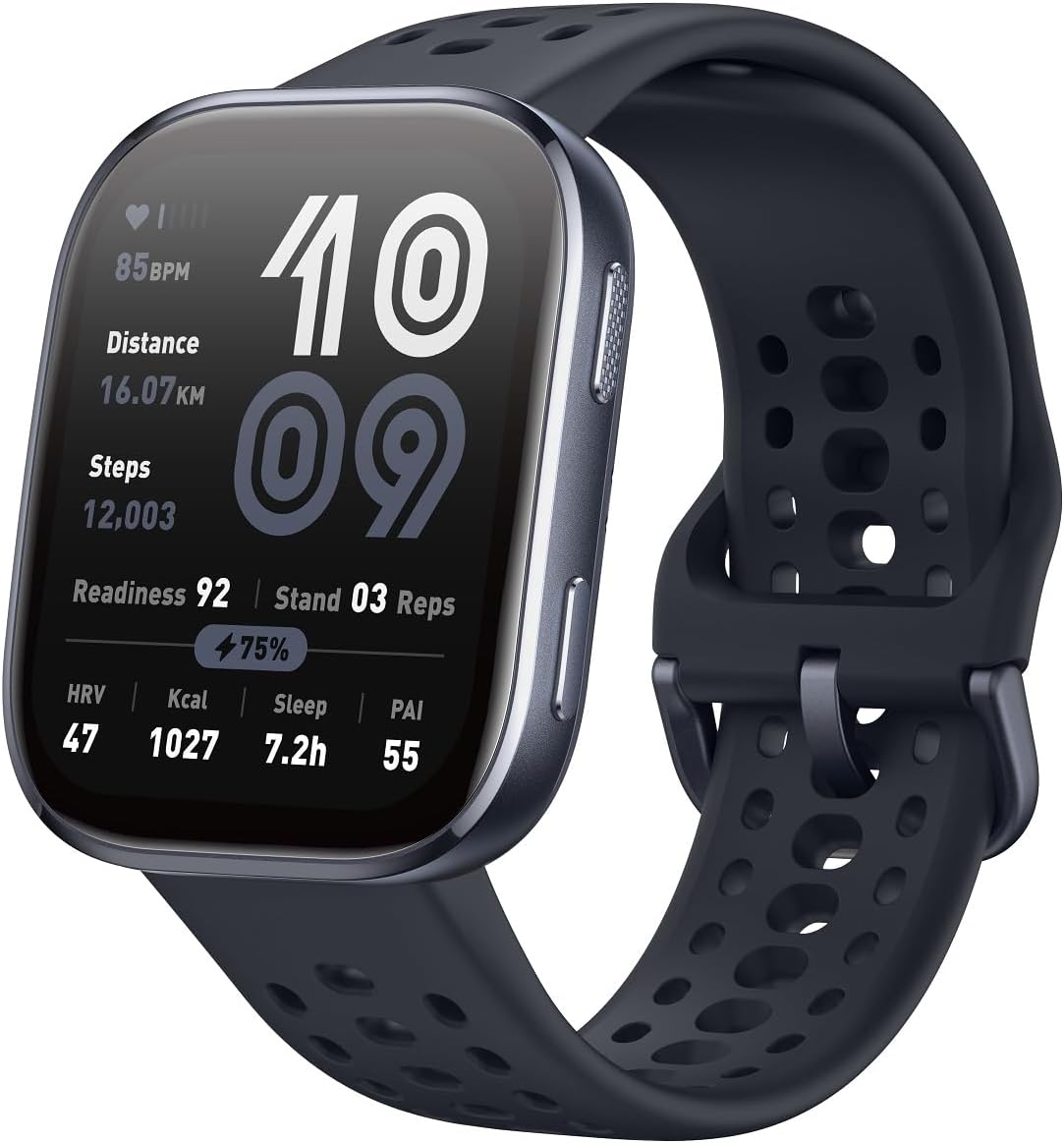
The Garmin Forerunner 165 is a value-focused entry for triathletes who want accurate activity tracking, a responsive AMOLED screen, and training support without moving to a premium multisport watch. It carries a 4.6 rating, and its 43mm size is lighter and more approachable than the bulkier adventure alternatives in this roundup.
We may earn a commission when you buy through this link, at no additional cost to you.
Built-in GPS records pace and distance, while wrist-based heart rate provides basic physiological context. More than 25 activity profiles include running, cycling, HIIT, and strength training. Personalized daily workouts, Garmin Coach, race-adaptive plans, recovery time, and training-effect labels make the watch more useful than a simple step tracker, particularly for athletes balancing several disciplines.
Its limitations center on depth and endurance. The supplied specifications do not mention full-color onboard maps or the advanced readiness and endurance tools found on the Forerunner 970. Battery life is stated as up to 19 hours in GPS mode, so the most demanding long-course race may require conservative power management. Safety features also depend on a paired phone, compatible setup, and network coverage.
For a new triathlete, a training partner, or someone replacing a basic fitness tracker, the Forerunner 165 is an excellent first serious sports watch. It balances screen quality, GPS tracking, coaching, health insights, smart notifications, and contactless payments without the complexity of a top-tier adventure model. It is the most sensible budget-focused recommendation in the guide.
Daily suggested workouts adapt to performance and recovery, while race-adaptive plans and Garmin Coach provide structured direction. This is useful for self-coached athletes who want flexibility without designing every session from scratch.
The morning report combines sleep, recovery, training outlook, weather, and HRV status. Smart notifications, incident detection, Assistance, and Garmin Pay add everyday utility when the watch is used beyond training.
We may earn a commission when you buy through this link, at no additional cost to you.
The Garmin vívoactive 5 in Ivory blends a 42mm AMOLED display, broad health tracking, and more than 30 indoor and GPS sports apps in a lifestyle-friendly package. Its 4.3 rating makes it a strong option for triathletes whose training includes substantial strength work, yoga, swimming, walking, or time spent recovering away from endurance sports.
We may earn a commission when you buy through this link, at no additional cost to you.
Body Battery, sleep scoring, personalized sleep coaching, HRV status, stress tracking, morning reports, and automatic nap detection create a detailed view of daily readiness. Workout benefit and recovery-time estimates help connect training with physical strain. The watch also supports running, cycling, HIIT, strength, and other activities, while Garmin Coach provides adaptive plans for athletes who want structure without a race-specific device.
Music can be downloaded from Spotify, Amazon Music, or Deezer for phone-free listening, adding value during long sessions. However, the listed feature set does not include full-color onboard maps, turn-by-turn navigation, or the advanced training-readiness tools emphasized on the Forerunner 970. The watch is therefore better suited to general fitness and wellness than detailed course execution.
This is a good choice for a triathlete who wants one watch for training, recovery, sleep, and everyday wear. Its moderate size and long stated smartwatch battery make it convenient for continuous use. Athletes whose priority is race analysis and unfamiliar-route navigation should choose a more specialized Forerunner or fēnix model instead.
Sleep coaching, HRV status, stress monitoring, naps, and Body Battery offer context that is useful during the less structured phases of a triathlon plan. These functions can help reveal whether a low-energy day is isolated or part of a broader recovery pattern.
More than 30 sports apps, preloaded workouts, custom Garmin Connect workouts, and adaptive coaching cover the cross-training that surrounds swim-bike-run preparation. Offline music adds a welcome distraction during long rides and recovery walks.
We may earn a commission when you buy through this link, at no additional cost to you.
The Amazfit Bip 6 stands out for its large 1.97-inch AMOLED display, lightweight aluminum body, extensive workout selection, and stated battery life of up to 14 days. Its 4.2 rating and compatibility with both iOS and Android make it an accessible option for triathletes who want a large display and broad activity support in a relatively straightforward sports watch.
We may earn a commission when you buy through this link, at no additional cost to you.
The device offers more than 140 workout modes, including HYROX Race and Strength Training, plus personalized AI coaching. It supports downloadable maps, turn-by-turn directions, and positioning through five satellite systems. Health monitoring covers heart rate, sleep, blood oxygen, and stress, while 50-meter water resistance provides a stated level of aquatic durability.
The compromises lie in the depth and context of the metrics. Unlike the Garmin models, the supplied information does not mention advanced training readiness, endurance scores, recovery estimates, race widgets, multi-band positioning, or detailed multisport training analytics. Water resistance also deserves attention for open-water swimming and repeated pool sessions. Users should understand the rating and verify manufacturer guidance before exposing the watch to demanding aquatic conditions.
The Bip 6 is most suitable for a recreational triathlete or budget-conscious athlete who values screen size, long battery life, many workout modes, and broad phone compatibility. It can track the broad mix of activities in a triathlon plan, but racers seeking advanced pacing, training-load, and navigation insight should favor a more specialized sports watch.
The 1.97-inch AMOLED panel is unusually generous for a lightweight sports watch. Bright sunlight readability and a large viewing area can make it easier to check pace, activity menus, and health summaries at a glance.
More than 140 modes, AI coaching, and support for five satellite systems provide broad coverage across running, cycling, strength work, and general fitness. That variety is useful for athletes whose training plan changes from day to day.
We may earn a commission when you buy through this link, at no additional cost to you.
The Samsung Galaxy Watch 8 40mm emphasizes connected wellness, sleep guidance, and running feedback in a slim cushion design. With a 4.4 rating, it is a strong alternative for a triathlete who wants attractive everyday technology alongside basic workout coaching. The watch pairs seamlessly with Samsung phones and also supports other Android devices.
We may earn a commission when you buy through this link, at no additional cost to you.
Running Coach analyzes performance and provides real-time feedback, while event-specific programs are available for distances such as 5Ks and marathons. This could help a beginner or intermediate athlete structure a run plan without navigating a complex training menu. Advanced Sleep Coaching, Bedtime Guidance, and Energy Score add context by combining previous-day sleep, activity, and heart-rate information.
The feature set is less explicitly multisport and less detailed than the Garmin options. Its listed specifications do not highlight full-color onboard maps, multi-band GPS, advanced race analytics, or extensive endurance metrics. Blood-pressure tracking is possible after calibration with a separately sold cuff, and several Galaxy AI functions are tied to compatible devices, regions, or account conditions. The Bluetooth version also differs from cellular connectivity in terms of independence from a phone.
Choose the Galaxy Watch 8 for an Android-centered athlete who values sleep coaching, compact styling, notifications, and running feedback. It may serve well as a wellness companion or approachable first sports watch. Serious triathletes should confirm that the current ecosystem provides the detailed swim, bike, course, and recovery tools they need before committing to it as a primary race watch.
Running Coach offers real-time analysis and program options for popular race distances. This is most helpful for athletes who respond to simple prompts and structured progression rather than deep endurance-metric analysis.
Advanced Sleep Coaching, Bedtime Guidance, and Energy Score turn overnight information into a daily overview. For a triathlete balancing demanding sessions with recovery, that context can complement a multisport watch or stand on its own as a wellness tool.
We may earn a commission when you buy through this link, at no additional cost to you.
The Garmin fēnix 9 Pro is the most expedition-oriented watch in the guide, with a 51mm titanium case, 1.5-inch sapphire AMOLED display, LTE, and inReach satellite connectivity. Its 4.1 rating reflects a specialized product whose strengths go beyond ordinary swim-bike-run tracking. It is aimed at athletes and adventurers who train in places where reliable phone reception may be limited.
We may earn a commission when you buy through this link, at no additional cost to you.
LTE allows the watch to exchange messages, make calls, and share live location without carrying a phone. Satellite connectivity can send messages, provide check-ins, and trigger interactive SOS through Garmin Response when an active plan and coverage allow it. The product listing also notes coverage limitations, subscription requirements, and regulatory considerations, so buyers should understand those conditions before relying on the safety features.
Performance tools include stamina curves, stamina zones, more than 100 activity profiles, enhanced rowing and rucking functions, indoor rowing VO2 max support, and rucking load calculations. These capabilities broaden the appeal to adventure racers and ultra athletes. The trade-off is size: 51mm is likely to feel substantial during sleep, pool swims, and long runs, even though the titanium construction helps keep it lighter than its dimensions might suggest.
This is the premium recommendation for a triathlete who values exceptional battery and connectivity options, rugged construction, and a wide range of activities. It can be especially persuasive for racers who combine standard races with off-grid training or multi-day events. Athletes who do not need LTE or satellite safety should favor the smaller, more streamlined Forerunner 970 or Forerunner 165.
LTE messaging, voice calls, LiveTrack, and Garmin Messenger location sharing can keep an athlete connected without a phone. Satellite messaging and SOS add another layer, although active subscriptions, coverage, and regional rules determine availability.
Stamina curves and zones visualize how far, how fast, and how long an athlete can continue based on fitness and training history. The expansive activity library also supports athletes who move beyond traditional triathlon training into rowing, rucking, and prolonged adventures.
We may earn a commission when you buy through this link, at no additional cost to you.
The Garmin Venu 3 is a polished fitness smartwatch with a 45mm AMOLED display, up to 14 days of stated smartwatch battery life, and more than 30 indoor and GPS sports apps. Its 4.4 rating reflects a strong blend of health, activity, and communication features, giving it broad appeal to triathletes who want one device for training and everyday wear.
We may earn a commission when you buy through this link, at no additional cost to you.
Body Battery, sleep scores, sleep coaching, HRV status, naps, stress tracking, and recovery-time estimates provide a useful view of training demands. Sports profiles include running, cycling, swimming, walking, HIIT, and golf. Wrist-based calls, smartphone voice-assistant responses, and text replies add communication convenience, with direct wrist text responses listed for Android users.
Compared with the Forerunner 970, the Venu 3 emphasizes wellness and everyday convenience rather than detailed race navigation. The supplied specifications do not mention full-color maps, turn-by-turn directions, advanced training readiness, endurance score, or race widgets. Its 45mm case also needs to be considered by athletes with smaller wrists, especially during sleep or swimming.
The Venu 3 is well suited to a triathlete who wants an attractive general-purpose watch with credible sports tracking, recovery information, and phone connectivity. It works particularly well when training variety matters and precise course navigation does not. Serious racers or athletes training in unfamiliar terrain should choose a watch with explicit mapping and advanced endurance features.
The ability to take calls, respond to messages, and access a connected phone's voice assistant reduces the need to carry a phone during many everyday moments. This convenience can also be valuable during transition areas and long training days.
Sleep coaching, HRV, stress, naps, Body Battery, and recovery time make the watch useful during the less glamorous phases of a season. Athletes can use this information to decide when to push, recover, or adjust an expectation.
We may earn a commission when you buy through this link, at no additional cost to you.
The black Garmin vívoactive 5 provides a compact 42mm AMOLED smartwatch, up to 11 days of stated smartwatch battery life, and a broad selection of health and fitness tools. Its 4.3 rating makes it a versatile choice for triathletes who want relatively unobtrusive wristwear while retaining serious GPS activity tracking.
We may earn a commission when you buy through this link, at no additional cost to you.
More than 30 sports apps cover running, cycling, swimming, walking, HIIT, strength, and other activities. Body Battery, sleep coaching, HRV, stress, morning reports, menstrual and pregnancy tracking, and automatic nap detection make the watch particularly health oriented. Garmin Coach plans, preloaded workouts, custom Garmin Connect workouts, and offline music increase its value across long training sessions.
It is not as specialized as the Forerunner 970, fēnix 9 Pro, or Instinct 3 AMOLED. The supplied information does not list onboard maps, advanced readiness analytics, endurance metrics, satellite communication, or a highly rugged case. A lower-ranked position does not make it a weak option; it reflects its emphasis on accessible health and fitness functions rather than elite triathlon navigation or performance analysis.
This model is best for a triathlete who values a smaller format, extensive wellness tracking, cross-training support, and music during workouts. It also works well for athletes who want a watch that transitions easily from swim-bike-run sessions to everyday wear. Racers should choose a more specialized model if detailed maps and advanced endurance insights are central to training.
The 42mm case is easier to wear for sleep, general wear, and pool sessions than a large adventure case. Its AMOLED display still provides clear access to training and health data without demanding a bulky wrist presence.
Automatic nap detection, sleep coaching, HRV, and Body Battery support a more complete recovery picture. Downloadable music lets an athlete leave the phone behind during long rides, walks, or recovery sessions.
We may earn a commission when you buy through this link, at no additional cost to you.
The most useful triathlon watch is not automatically the one with the longest feature list. Evaluate GPS reliability, multisport depth, battery behavior, recovery tools, comfort, and the environments in which you will train before deciding which priorities matter most.
GPS accuracy determines whether recorded distance, pace, route, and elevation remain dependable across training conditions. Built-in GPS removes the need to carry a phone, while multi-band positioning, SatIQ, and multiple satellite systems can improve confidence in urban areas, dense trees, and mountainous terrain. Built-in maps and turn-by-turn directions are especially valuable for race reconnaissance, long rides, and unfamiliar trail routes.
A triathlon watch must transition cleanly among swimming, cycling, running, strength work, and recovery activities. Look beyond a basic activity count and examine whether swim metrics, cycling data, running dynamics, transitions, and multisport workouts receive dedicated support. A broad mode list is useful, but depth and sport-specific fields are better indicators of long-term value.
Battery claims often refer to smartwatch mode, which does not represent a GPS-recorded long-course event. Compare GPS runtime, always-on display behavior, map use, phone connectivity, and continuous heart-rate tracking. Athletes completing iron-distance races should account for a long ride, transitions, and a marathon while preserving enough power for navigation and emergency features.
Training readiness, recovery time, HRV status, sleep coaching, training effect, and adaptive workout suggestions can help athletes make informed adjustments. A useful watch should not merely label effort; it should connect workload with fatigue and recommend a course of action. Beginners may benefit from simple guidance, while experienced racers may prefer endurance scores, stamina curves, and detailed performance trends.
A large display can make statistics easier to inspect during movement, while a compact case may be more comfortable for sleep, swimming, and all-day wear. High-contrast AMOLED screens are particularly helpful in direct sunlight. Consider readability with wet hands, whether the controls work with cycling gloves, and whether the watch is likely to rotate or catch on clothing during a run.
Triathlon watches should tolerate sweat, rain, repeated handling, and frequent transitions. Fiber-reinforced polymer can offer a lighter and rugged alternative to metal, while titanium and sapphire may suit athletes who prefer premium construction. Water-resistance ratings also matter when comparing pool and open-water use. Check the stated rating and manufacturer guidance before swimming.
Bluetooth notifications are useful for calls and messages, while LTE allows some watches to communicate without a nearby phone. Satellite messaging and SOS features can provide additional safety in remote areas, although they may require subscriptions and remain subject to coverage and regulatory limits. Offline music is another valuable feature for long rides and recovery sessions.
The watch is only one part of the experience; its companion app determines how workouts, routes, health history, and settings are managed. Consider whether you already use that ecosystem, whether data exports and community features meet your needs, and whether account requirements create friction when switching devices. Cross-platform support matters for athletes who use both an iPhone and Android phone.
Begin by configuring the watch with its companion app, enabling the sport profiles you use most, and setting notification and safety preferences before race week. Add your emergency contacts, understand any phone or network requirements, and complete a short outdoor test near familiar roads. A controlled test can reveal whether the display, controls, and GPS behave as expected without the pressure of a race.
Organize activities around what you need to monitor. Use distinct running, cycling, swimming, strength, and recovery profiles, then review duration, pace or speed, heart rate, and route information afterward. During multisport sessions, start and stop each leg cleanly if the watch supports manual transitions. For race preparation, use course details, suggested workouts, or training plans as prompts while retaining judgment about fatigue, weather, and race conditions.
Care starts with the charging routine. Keep the contacts clean after long runs, rides, and swims, especially before placing the watch on a charger. Rinse the device with fresh water when the manufacturer recommends it, and dry the case, band, and charging contacts fully. Avoid exposing the watch to heat beyond its operating guidance, and review the stated water-resistance rating before repeated pool or open-water use.
The Garmin Forerunner 970 is the strongest all-around recommendation because it combines multisport performance metrics, recovery tools, full-color maps, and advanced positioning. The Forerunner 165 offers the best budget approach, while the fēnix 9 Pro is the premium option for athletes who also value rugged construction and remote connectivity. Your ideal watch should also fit your training volume, navigation needs, and comfort preferences.
Onboard maps are not essential for every athlete, but they are valuable if you train on unfamiliar routes, travel to unfamiliar race courses, or prefer not to carry a phone. They also make it easier to preview turns and course details before a long ride or run. Athletes sticking to known loops may prioritize other features such as battery life, sleep tracking, or a lower-profile design instead.
A full-distance event involves far more activity than standard smartwatch use, so compare GPS runtime carefully. The watch should ideally cover the bike, run, transitions, and final navigation without an unplanned shutdown. Disable unnecessary settings and consider a power bank or charging strategy for training days, especially when using maps, continuous heart-rate tracking, and phone notifications.
Garmin models in this guide generally provide more explicit multisport tracking, built-in navigation, endurance metrics, and recovery guidance. The Galaxy Watch 8 offers attractive design, strong sleep features, running feedback, and convenient Android integration. A Samsung user may prefer its ecosystem, while a triathlete focused on race data, course navigation, and cross-training will usually find more depth in the Garmin selection.
Yes, and that is one of the main reasons to choose a sports smartwatch over a basic tracker. Every model in this guide includes running and cycling activities, and the listed Garmin and Amazfit models also include swimming. Check the water-resistance rating and sport-specific features before open-water use, and confirm whether your preferred watch supports the stroke, pool, or open-water data you need.
Both matter, but GPS accuracy is foundational because every pace, distance, route, and elevation calculation depends on it. Training metrics then help you interpret the recorded effort and adjust future sessions. Prioritize dependable positioning first, followed by the recovery and workload insights that match your coaching approach and race goals.
LTE is useful when you want calls, messages, and location sharing without a nearby phone, while satellite communication can be valuable in remote training areas. Neither is required for ordinary racing. The Garmin fēnix 9 Pro supports these capabilities, but active plans, coverage limits, regulatory restrictions, and device compatibility mean you should confirm the exact terms before relying on them for safety.
Choose a multisport watch if you regularly train through all three disciplines, spend significant time in transition areas, or value unified recovery and race planning. A running watch may be sufficient if your program is run-focused and cycling and swimming data are secondary. The best choice is the one that supports your actual weekly routine without unnecessary size, complexity, or cost.
The Garmin Forerunner 970 takes the lead for athletes seeking the strongest balance of race preparation, navigation, recovery guidance, and multisport training. The Forerunner 165 is the most practical budget selection, offering built-in GPS, personalized workouts, health reporting, and more than 25 activity profiles. For athletes who want the most specialized and connected design, the fēnix 9 Pro adds LTE, satellite safety, a titanium case, and advanced stamina tools.
Prioritize the functions that will influence your training. Run-bike-run athletes who navigate unfamiliar routes should focus on GPS quality, maps, and battery runtime. Athletes building a first multisport setup can get excellent coverage from the Forerunner 165, while those balancing intense endurance work with recovery may favor the vívoactive 5, Venu 3, or Galaxy Watch 8. The Instinct 3 AMOLED is a rugged alternative for athletes who prioritize resilience and battery life.
Product ratings, bundle contents, features, and current prices can change, and the supplied Forerunner 970 listing includes a notable model-reference inconsistency. Before purchasing, confirm the exact watch configuration, included accessories, water-resistance guidance, connectivity requirements, and latest specifications on the retailer page. Comparing those details against your race distance, training environment, and recovery needs will lead to the most satisfying long-term choice.